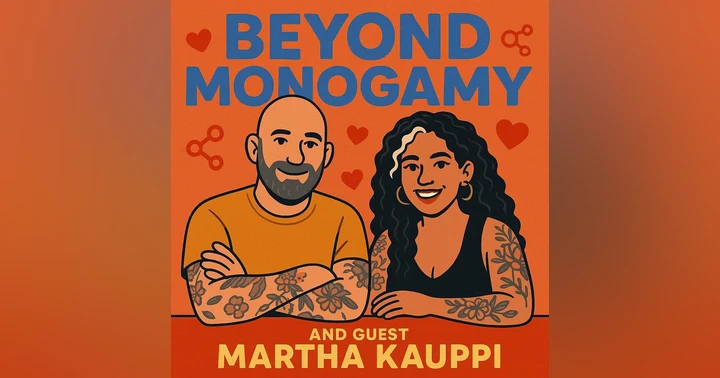

Non-Monogamy, Attachment & Communication — ft. Sex Therapist Martha Kauppi
This episode is a deep, grounded, and powerful conversation.
In this episode of Beyond Monogamy with Adam & Pris, we sit down with relationship and sexuality professional Martha Kauppi, an AASECT-certified sex therapist, author, educator, and founder of the Institute for Relational Intimacy.
Martha works at the intersection of intimacy, attachment, nervous system regulation, and relationship patterns — helping people understand not just what’s happening in their relationships, but why it’s happening in their bodies, emotions, and connection styles.
Together, we unpack some of the most important (and misunderstood) parts of ethical non-monogamy and long-term relationships: communication, differentiation, emotional regulation, compersion, desire, and the real work that starts after the fun part.
Martha shares how her personal life and family history led her into this field, why open relationships have been unfairly pathologized in therapy spaces, and what decades-long non-monogamous relationships actually look like when they are built with intention.
This conversation goes far beyond labels. We talk about what happens when couples move from swinging into emotional connections, how to navigate mismatched needs, how to express hard truths without destroying trust, and how to stay connected when discomfort shows up.
You’ll hear powerful insight on:
- Why communication is a skill set, not a personality trait
- The difference between rules, regulation, and relational safety
- Why many therapists misunderstand non-monogamy
- How to explore ethically without overwhelming your relationship
- Compersion, jealousy, and emotional self-awareness
- How long-term non-monogamous relationships actually sustain intimacy
Adam and Pris also get personal — opening up about their own journey from swinging into polyamory and back out again, what they learned about themselves, and how those experiences reshaped their communication, trust, and emotional depth.
This episode is honest, validating, and packed with insight whether you’re monogamous, exploring, actively non-monogamous, or simply trying to build better relationships.
About our guest:
Martha Kauppi is a certified sex therapist, clinical trainer, and author of Polyamory: A Clinical Toolkit for Therapists (and Their Clients). She trains therapists internationally and hosts the podcast Untangling Intimacy.
Learn more at: Institute for Relational Intimacy
Listener discretion advised. This show contains adult themes and real relationship discussions.
0:07 Alright y'all, before we dive in, a quick heads up. This show is raw, real, and definitely not rated pg. We're talking about adult themes, sexual content, and the kind of stuff you probably don't want blasting through your speakers at work or around your kits. So grab some headphones, pour your drink of choice and get comfy. Oh, and just so we're clear, we are not licensed therapists, counselors, or sex. Couches. Sex coaches. Sex coaches, not sex couches or just a couple of people sharing our lives, experiences and sexy adventures. An ethical non-monogamy.
0:47 So with that, pull up a chair and enjoy the show. And. Hello, and welcome to another episode of Beyond Monogamy. I'm Adam. And I'm Pris. And today we are back with another amazing conversation for you all. But before we jump in real quick, if you love this show, if it's helped you, made you laugh, made you feel seen, or taught you something new, please do us a favor and hit that, like that subscribe button, that share button, and most importantly, leave us a review because those reviews are huge. Mm-hmm. For helping this podcast grow in this lifestyle and the relationship space. Seriously, they make a massive difference and we appreciate every single one of you who takes the time to do that.
1:28 Absolutely. Now, with that being said, today we are sitting down with Martha Kauppi. Martha is a relationship and sexuality professional who works deeply in the areas of intimacy communication attachment. Nervous system regulation. Mm-hmm. And helping people build more connected, conscious and satisfying relationships, including folks in alternative and non-traditional relationship structures. Her work focuses a lot on how our bodies, our emotions, and our relationship patterns all connect, and how we can start breaking old cycles and building relationships that actually feel safe, sexy, and sustainable. Yes. So today we're gonna be talking about connection, desire, emotional patterns, non-monogamy, healing, communication, and all that real stuff that shows up once the fun part starts.
2:17 And we're really, really excited to get her perspective, her work and what she's seeing with couples and individuals right now. Yes. So beyond monogamy family, settle in, maybe pull up a chair, grab your favorite drink, and let's welcome Martha to the show. Welcome, Martha. Yes. Thank you Martha. Thank you for being here. Thank you. I'm so happy to be here. Thanks for having me. Yes. Oh, we are, we are tickled pink to have you. I'm, I'm very excited. Uh, now I'm gonna just dive right in and I'm sure you're used to that. I, I guarantee you get tons of questions. Uh, but I'm really curious about basically how you got here. Mm-hmm. As far as the, the non-monogamy portion of it. What, what originally pulled you into this line of work?
2:59 Uh, that's a really interesting question. So I am an ASEC certified sex therapist, so that's my kind of licensing and certification. And when I was in therapy school, which is a master's degree first, and sometimes people go onto a PhD, but when I was in my master's program, I was taking a relationship therapy course, couples therapy they call it, I don't call it couples therapy. I call it relationship therapy because we're not all in couples. I asked, you know, do you ever work with people who are in consensually non-monogamous relationships or polyamorous relationships? And I asked about this because my brother has been polyamorous for his entire adult life.
3:44 And so it's just sort of part of my sort of family system that's part of, that's an option in life and it's part of life and it's a effective, normal, healthy way of being in a relationship. So I asked about it. And as an aside, I also am in an open relationship, so I just thought let's get this into the conversation. And the professor who I really loved and learned a lot from, had a really bad answer which was I've worked with a number of clients who are in polyamorous relationships, but. It seems like one or other or the other of them always has a parent who has a personality disorder.
4:28 Okay, so first of all, let me just frame this up. This was a little while ago, so this wasn't like this year or anything. So there's a cohort effect probably but I did think, gee, that's an interesting answer. First of all, I'm thinking privately in my mind, I'm thinking about my brother, I'm thinking about me. I'm thinking, gee, I don't wanna say my mother didn't have a personality disorder, but still, that seems pretty pathologizing to me, right? That's a really intriguing answer. On the one hand, I was excited to hear that he had worked with people in open relationship structures, and then on the other hand, I was like, well, that's an interesting conclusion to come to as the thing that you bring forward, first, it's kind of like a rainy cloud hanging over, you know?
5:13 Yeah. It's just a pathologizing frame. Mm-hmm. Really like, wow, some sort of psychopathology leads to this way of being. Mm-hmm. And as a queer woman I'm used to that kind of thinking like why are you gay? Why are you queer? Probably you were abused by your father or abused by your mother, or in love with your mother, or hated your father. I don't know. Yeah. And the truth of the matter is there's absolutely no evidence that there's any kind of psychopathology going on with open relationships or with being queer. So anyway, this is how. I got interested in this as a research subject.
5:54 Like I was like okay. If that's sort of the common thinking around this from somebody who's pretty open-minded and has, he's working with people in open relationships. He is willing to, he is open to it, he is in the conversation. This is great. And that's the first thing. Then obviously we need some more data. Yeah. I need, right. Yeah. I need to be able to train some therapists to be able to do a better job with this, basically. So, I did my research as part of my master's program in polyamory. I was specifically looking for how long are people's open relationships and what happens with the intimacy in an open relationship when you add another partner, because I had read.
6:43 Everywhere I looked, I read the on deep intimacy, true intimacy, real intimacy, real attachment only can happen in a relationship between two people. And I was like, well, that's abundantly obviously not the case because I'm living it. My brother's living it, so somebody's missing something and maybe it would be good if we were part of somebody's statistics. Yeah. So that was, that's how I got started. Taking it to the next level beyond just, I wanna be a therapist who works with open relationships as well as every kind of relationship, but I wanna be a therapist who also knows something about it beyond my own personal experience and what I can read. Cat Lee.
7:24 That is so interesting. That's so, yeah. That's so intriguing, man. You know, that's, this is my favorite part of the show is normally the very beginning when we have our guests on, because I like to see what brought them. This is a very specific space that we're in. Mm-hmm. Um, and it's, I've never really walked into that question and had somebody answer and go, it just kind of fell into my lap, you know? It just, it just never happens that way. You know, there's normally a, a lot that, that brings this, the cosmos are just aligned just right to bring this person into this space at this time. And, uh, and so I, I just, I love that it's so intriguing.
8:07 It is. I mean, the fact that you, that your brother was already, you know, living that kind of life and then you're living that kind of life, just shows you that there's a lot of people out there that. I need that kind of navigating like, you know, navigation to kind of help them kind of work through it and stuff like that. So That's awesome. That's great. You brought a lot to the table, so Yeah, it's a lot of knowledge, personal knowledge, you know, which helps you, just get more into it, more in depth and understand it even better. Yeah. That, and it's really has my own relationship experience and my brothers Very directly challenges a lot of assumptions about open relationships.
8:50 And so specifically the idea that, oh, an open relationship just can't stand the test of time. Mm-hmm. Or there isn't deep intimacy. You can't really have a solid relationship. It's something that's gonna be fleeting, you're gonna grow out of it. And, um. It's gonna, when you get a new partner, it's gonna destroy your old, like I knew those things were not true. They couldn't be true. Yeah. Yeah. They just couldn't because I had the evidence right in front of me. And so it turned out to be a really smart idea to do some research about it. And now today my relationships structure is somewhere in the realm of, Hmm, somewhere between kitchen table, polyamory, probably I would call it that.
9:36 And I have a queer partner of 30 years and another partner of almost 25 years. So Wow. Clearly those longevity ideas, like this is just something that's, you can't make last in the long term. I'm like, well that is so obviously not true that I don't even know where you could possibly have been looking. To get advice, everybody. I mean, my long relationships period. Yeah. Well, everybody thinks that they're an expert. Yes. Everyone. Yeah, that's for sure. You know, it's the same. Well, you know, we, we had a tax business and it seemed like everybody that came in to get their taxes done had a friend who was an expert and they knew everything. And, and it's, it's no different here.
10:18 You know, we, we create, uh, we have our podcast, but we also create content on TikTok and we try to educate as much as possible just from our experience. And everybody just knows mm-hmm. That open relationships and polyamorous relations, they just don't work. You, you can't last more. It's just, it just doesn't have it. Yeah. And I've heard this over and over again, and I just don't believe it because I am an old school, uh, lover of love and, you know, I, I have always been that, that person that I just. I love, love, and I love when people get to experience that. And I don't believe that that, uh, you know, it's one person with one person forever.
10:59 You know, sometimes it, it works for certain people. Mm-hmm. It's not for everyone, and this is the kind of the funny thing here. I'm so glad that you here. I was just about to tell you that. 'cause, um, Martha, we can't afford therapists. And so you're here now. I'm gonna take full advantage of this now. So just to kind of give you an idea, and most of our listeners probably already know this, but, uh, we had started out and the very beginning as swingers. And so we were, uh, all about the sexual aspect. My beautiful wife here has had experience in that lifestyle with a previous person to me. Uh, but it was kind of toxic. Uh, so when we got together. She started telling me about this lifestyle that she was previously a part of, and I said, oh my goodness, I would love that.
11:46 That sounds great. And of obviously as, as a, what, a 28-year-old? Yeah. I was like, are you kidding me? I can have sex with other women. You know, it just seemed very mind blowing of an idea. Uh, and then as we got into the lifestyle and I started realizing that there was less, uh, emphasis on experiences and more on connection. Mm-hmm. More on friendships, more on, on, relationships in just the sexual portion of it as time went on. We had friends of ours say, well, we're poly. And I said, well, what is that? And so they explained to me very, very rudimentary but they basically said, well, we're married, but we date others outside of the marriage.
12:29 Now I know that there's, now there's way more to it than that. Yeah. That it was really kind of dumb in it down. But for somebody who didn't know anything about it, this sounded enticing to me. Because I feel like I have a, personally, a lot of love that I can share. And I know that like I love my wife and I love her in certain ways that I don't, I know I couldn't love somebody else with, but that doesn't mean that I cant love them as well. I love all of my friends, like I love, love them, uh, so we decided to try Poly, and we did poly for, we were polyamorous for five years. Mm-hmm. We went into it with no. Real help as far as guidance.
13:12 Um, we did our best to find information as much as we could. We tried to talk to people about it. But a lot of times when you ask people simple questions, they start going, you can Google it. You don't need me. Yeah. You can Google this. Yeah. And that's, that's kind of, and everybody it, everybody has their own way of, they do appalling, like you had mentioned earlier, kitchen table. Right. A lot of people do not know what that is. And so when we were getting, when we first got into it, we were, I was like, yeah, I don't, I don't think so. We, we really can't do this. This is not my, I'm very territorial. Yeah. Um, and so I was like, there's no way this could ha this can work. And we tried it. We did it and it.
13:54 It wasn't, wasn't for me. You know, it really wasn't. And so out of this five years that we attempted And we did it together and we did it separately. So we, we dated others as a couple. Mm-hmm. But we also dated others separately as individuals. And I was relatively successful. I was able to find connections. My wife is a bit more selective than I am though. Uh, and so it was a bit more difficult for her to, to make connections and not to mention she just really wasn't enjoying it. Mm-hmm. And so that's where we understood that we weren't communicating properly about this whole thing. And one day it came to a pass where she basically said she didn't wanna be poly anymore.
14:34 And I'm okay with that because my relationship has always been my number one priority now. I just gave you a lot. I know, but I, I, I promise you I'm heading somewhere. With all of that being said, we decided to focus more so on the sexual aspect of it. And I basically told her, I said, look, I need connection. I am not transactional. I cannot just go out and have sex with random people. I wanna like them, I want to have a connection with them. I wanna have some sort of relationship with them, even if it's not romantic. Uh, and so we've been exploring and have adapted the friends with benefits to our repertoire. And it's wor it works for us and it works very well for us.
15:16 And that's, that's where we're at. But I always found it very interesting because in this world, there's, you know, everybody just figures. Well, you are, you are non-monogamous, so that means you're swingers or you're non-monogamous, so that means you're poly. Like, we get asked these questions and it's like, well. Yes and no. I mean, there's, and so then we have to explain everything to 'em as far as the different branches of non-monogamy and that sort of thing. There's a lot of ambiguity over what this is. And I'm curious, I mean, you have such great knowledge about this as far as polyamory is concerned, as far as the romantic aspect of it.
15:59 What, first off, what is the, the biggest advice that you would give somebody who's new? Mm-hmm. Or considering the romantic aspect of, of polyamory? Lemme see if I can answer the question you're actually asking here. So, one of the challenges of going from a, from swinging mm-hmm. To. So the distinction I would draw here is to a form of consensually open that involves romantic feelings. You might call that poly, you might call that friends with benefits. I don't care what you call it, but there's a distinction because swinging doesn't always involve emotions.
16:43 It does always involve sex. So a form of consensually open that involves sex and emotions is a real shift and it's gonna present some challenges probably along the way. And you are gonna learn some stuff about yourself, and you're probably gonna learn some stuff about your partner as well. So that's for sure. Right? Yeah. I wish everybody could. Find the support that they need when they need it. Mm-hmm. And that's why I trained therapists. Primarily what I do is train therapists to work with sex issues, including consensual non monogamies.
17:24 And I wrote the book that I did because I wanted people who maybe couldn't afford a therapist or didn't have access to a CNM knowledgeable therapist to have a very substantial self-help manual. So I basically wrote a textbook for therapists about working with consensual non monogamies and made it accessible to both audiences, therapists, and people who are in open relationships so that you can use it as a self-help manual. It's got a whole bunch of worksheets and whatnot in it. So then. My mission here obviously is to help people who are trying to navigate these kinds of spaces actually get some meaningful support.
18:11 And I like having the opportunity to tell therapists what I think they need to know in terms of how to conceptualize a case, how to break it down. Mm-hmm. How to think about the skills that go into your open relationship, how to think about the challenges that you're seeing, instead of just thinking you have more than one partner. There's your problem. If you didn't have more than one partner, your partner wouldn't be jealous and you wouldn't be having all the problems that you're having today. So I think monogamy is really the solution to your problem. And my thought is, well that's pal pathologizing and it's extremely limiting and it's gonna lose you the client for good reason. Right? Mm-hmm. Mm-hmm.
18:51 So let's try to. Help therapists and coaches be resourced to do a little better of a job than that. And most importantly, let's help people who are navigating difficulty in their relationships get the support they need. So to just sort of put all of this together, when you think about me as a trainer of therapists therapists by definition are seeing people in relationships that are having some challenges, whether they're open relationships or whether they're monogamous relationships, whether they're polyamorous, no matter how they're defined, and no matter what they look like behaviorally, they're having challenges or they wouldn't be asking for help.
19:37 So it makes some kind of sense that therapists are like. I don't think that can ever work 'cause I've never seen it work. Mm. And that's where I feel like you come in and I come in to say, I've seen it work. Yeah. I'm a good example of seeing it work, right? Mm-hmm. So when I start breaking it down, like trying to figure out, okay, I'm working with a couple or a throuple or a quad or whatever, and they're having this particular challenge, I wanna try to break it down to understand where's the struggle, where are the growth opportunities for all partners involved? Because the solution is not have a whole different shape of relationship until the clients decide, actually it's not for me.
20:23 And that's where I really wanna just bow down and say, Pris, you're brilliant to be able to figure out what's true for you and say it. I think that's tremendous. Good job. Thank you. Thank you. I mean, it was, people have a hard time. It was hard. Yes, it was very hard because although I know that my husband loves me and I know that we have a family, we have a relationship, it's very like, Ooh, is this what he wants? Is this really what he wants to do? Is this gonna break us? Or whatever, and so I had to sit back and be like, oh, well, I mean, whatever happens, we're gonna have to navigate through that. And it was news to me.
21:03 So she told me afterwards, and I've always told her, I said, look, if at any point, whether it's swinging, whether it's poly, whatever it is, mm-hmm. If at any point you are uncomfortable or you don't wanna do this anymore, or same with me. All it takes is one of us to say, I don't want to do this anymore, and no questions asked. You got it. Yeah. Like, we're walking away from it, no questions asked, because this is more important to me. And so we've always said that. And so when she told me afterwards, after we worked out everything, she said she didn't wanna be poly. And we had conversations over it. She said, you know, I was really worried mm-hmm. That this was gonna be the end of our marriage. I, I, 'cause you never know.
21:45 Like Yeah. And that's what, and I, and I was like, I was blown away by this because me personally, I was like, I, yes I am. I am non monogamous in my heart. I am by nature. I've felt this way since I was middle school, high school, uh, this has always been something in my life. But for her, I would give up anything. You know what I mean? And so that just. I didn't realize it was that serious until we had conversations about it. Now, the great thing about our time in being polyamorous that we didn't, we didn't have this when we were swinging, but when we became polyamorous is where we really learned how to communicate.
22:27 Mm-hmm. Um, we thought that we knew how but as we went along, we started realizing no, like we were on the surface communicating, but there was a lot of uncomfortable conversations that needed to be had that we weren't having with each other. Mm-hmm. And that's when we get the same old question all the time, and I'm sure you've heard it before. You know how do you guys make it work? And it's like, well, communication all the way, you know, and yet communication is one of those words that doesn't quite have a definition. So, can I unpack what I think? Yes, yes, yes. Because I think it can be really helpful to break it down a little bit and figure out where exactly you're struggling because, communication is just, it's a very nebulous concept.
23:14 So, so I'm gonna break down what I call differentiation, which is a little basket of skills that enable relationality, including your ability to have a difference of opinion between two people and handle it well. So the first piece is to be able to look inside yourself and figure out what do I think, feel, want, prefer, believe, separate from what anybody else might want me to think, feel belief. So that was a hard thing that you had to do, Pris, to figure out, okay, this is what I'm experiencing. Mm-hmm. It might make him uncomfortable, but you had a way of checking in with yourself.
23:58 Figuring out, okay, I am struggling. Why am I struggling? What's going on? What do I want? What seems like a logical next step for me? And what do I need to actually say about it? So the first part of that is the look inside and being able to have that kind of honesty, self connection moment where you can figure out what's actually true for you. Some people really struggle to do that. Mm-hmm. So that's the first piece. If you can't do that, you're not really gonna have much luck opening your mouth and saying it to somebody else. So first you have to do the internal piece. Then the second thing is to bring that forward.
24:40 So to, for me to share what I think, feel want with somebody else who's important to me and who I think might disagree, might be hard to hear if I have something to say to my partner, Joanne. I'm wondering how is she gonna receive it? But somehow I have to figure out, this is something that I wanna share and then do so regardless of my fears about how it's gonna land for her. If it's important for me to say it, I have to figure it out and then say it. And then the third part is to be able to lean in with curiosity.
25:21 When somebody else shares something with you, that's hard for you to hear. So Adam, this was your opportunity in the conversation that you're talking about, where instead of saying, fuck you, we're done to say, what's going on for you? What are you experiencing? Tell me what's not going well. Tell me what is going well? Tell me what are your dreams and desires? What do you want? Walk me through this. You don't actually have to agree to do that. It's not the same as a problem solving conversation. So this is different from how are we gonna solve this impasse? This is really get to know you. And people get very confused about that because not everybody in an open relationship would say, if my partner says they don't wanna be in an open relationship, I'd be fine with that.
26:10 Some people, they feel like it's such a big aspect of who they are, that this might feel like a really enormous impasse to them. And you don't have to know what the solution is to sort of set aside your viewpoint and center somebody else's for long enough to get to know the situation through somebody else's eyes. And that's really, it's a very nuanced skillset that involves holding yourself with respect, standing up for yourself. Accurately representing yourself, possibly many times under stress and respectfully holding somebody else and their perspective.
26:55 And that's tricky. And underneath. So those are the three skills. Get to know yourself, figure out what's true, say it, get curious, ask good questions and center somebody else's perspective that makes it all work. But in order to do that, you have to be able to manage your emotions because emotions are gonna come up with any of that. And pri, you said it so perfectly, you are afraid to say it because if it was very important to him, it could represent a no-go. Mm-hmm. And you don't know that that is exactly in a nutshell, what makes differentiation difficult, because it's such a vulnerable experience to share what's actually true for you.
27:36 It's risky. You don't know how the person that you love so much is gonna receive that. And it wouldn't be surprising if they were upset by it and it became a very tense, difficult time. So there's some real risks involved in this. It's not just like, oh, you should just do this. Just do it is like a red flag for like big opportunity here. That's gonna be very complicated. So that's how I think of all of that stuff. And breaking it down like that allows me to help people build the capacity to do that when they don't quite have it yet.
28:16 Yeah. So if somebody has a difficult time holding onto their emotions when their partner says something that is hard to hear. I wanna experience some kind of sex that we've never had before. It feels important to me. That might be very hard to hear. Or honey, I wanna open our relationship. I've always wanted blah, blah, blah, and it feels really important to me. Can we have a conversation about that? Those are some difficult disclosures for a lot of people. Or like you said I don't wanna still be in this form of relationship. And what I love about your story is you went from there to some kind of exploration of what might be possible for you.
28:57 Mm-hmm. That might check the boxes for both of you. Yeah. In a really creative way that isn't based on a lot of relationship rules about what a relationship should look like and shouldn't look like, or what polyamory has to be, or CNM has to be instead starting from the real. Humans that we're working with. What do you like and hope for and want? And what lit you up about this and what was hard for you about this? Same questions for you, and then beginning to look from the place of desire. What would you like instead of what didn't you like?
29:37 What can you learn from what you didn't like about what you do like, or what experiment you might wanna run, or what small step forward you might wanna take so that you can get more feedback from the universe about what you do and don't like? This is something that if, like anything, if you've never experienced it, you're gonna need to experience it a little bit to learn. Mm-hmm. What's actually true for you? How could you have ever known that it would be hard for you to handle polyamory in some very particular ways if you never had the experience of your partner having romantic connections with somebody else? Yeah, no, that's, that's, and we've always said that too, and it's like, well, at least we've had, and I, you know, when I bring up polyamory, she's like, oh, not the pay word.
30:25 You know, like even after, it's been six years since we stopped and it's just still kind of leaves a bad taste in her mouth and, and we can joke about it now. Yeah. But it's, it's kind of like, well, if, to me our poll experience was very positive because we got to learn a lot about each other. We got to learn a lot about our relationship. And frankly, after that, when we stopped being Polly is when she realized that she could really trust me. Like she could always trust me, me, and like the communication definitely has is, is way better because of. The way I'm thinking now, you know? Yeah. The, the, oh, we're gonna have these uncomfortable conversations and we, we don't always agree.
31:06 Yeah. But if you have 'em, at least you know, okay, well this is where he's at, or this is where she's at, and it's figuring out how to navigate through that. So That's amazing. It's, it's work. It's work. And, you know, I, I will say that since we stopped being poly and as we've gone along and we, you know, now we're entertaining more of, uh, friends with benefits kind of thing I've sat back after, in the past five, six years, and I've gone, you know, I, if I have the opportunity to be poly again I don't think I'd wanna, and, and primarily because I'm exhausted. I'm exhausted and. I'm putting everything I have into this primary relationship.
31:47 And it was something I noticed right before she said she wanted to stop being poly was I was getting exhausted because I put everything I can into every relationship that I have as far as romantic relationships go, you get as much of me as I can give you. But we have five kids and we're we, I'm very close to them and I was, we were both raising them and then I'm putting everything I have into our time together and what little bit I had for myself, I was dividing up to give to somebody else and it just wasn't, it wasn't enjoyable. It was hard. It was hard in that, in that fashion. Yeah. Yeah. And so I can't do it. You've done it for so many years.
32:29 When you said you had 30 and 25 years under your belt with, and I'm like. Wow. That's and so my ears perked up. And I, and not to discuss you personally, but just in, in the aspect of, of keeping up relationships and the longevity of it and being able to split your time and, and everything, what could you advise on that? Well, I don't have five kids. That's fair. Smart. We'll start there. That's a good start. Yeah. 'cause the first thing that I was thinking is as you were talking, I, I was like, don't you have like a bunch of kids? Yeah. Yeah. You're dividing all of your time and the heart between prison and another love.
33:12 That's not what you're doing. Yeah. You're raising a family. And a big one. Yeah. And that is a whole lot of people who have very real needs from you. Yes. And, and. I think as a parent, your commitment to your kids is to show up for them in as complete a way as you can and as healthy a away as you can. And that's a growth commitment and it's a showing up commitment. It's a day-to-day commit. It's a great big commitment. So I just wanna say like there's a time and a place for everything. I can't imagine how.
33:55 I mean, it would be a nifty trick. It was, and it was, it was hard. Oh, Martha, hold on. I got a cherry to put on top of that. Hey. Okay, good. Yeah. Yeah. I was going through menopause. Oh yeah. And I was living three, three, I was living almost very big three hours away from all of my kids, which I never have. Yeah. I was living three hours away from my husband and my kids when toward the latter half of this, of the poly life was happening. And so yeah. I had depression. I had hormonal changes. I had anxiety. Stress. Anxiety. New job. No family. No. My babies weren't around me. I wasn't around like, yeah. It was such a bad time that.
34:38 Now just saying it out loud to you sounds so ridiculous that we even attempted, you know, now that you're saying it out loud, I think it's amazing that we survived. Yeah. Like, look at us, we're married, we're still married. He's still alive. We never left each other. That's incredible. Yeah. I mean, and I love great, I love your, so your book. So tell me, does your book give you, I know that you said you made it for therapist and you made it for regular people. Does it give you a lot of guidance on where to start or is it more of a navigation, like for someone who's already in, in Poly and already in depth in there? First of all, here's the book. Polyamory that at that. Yeah, look at I wrote that book.
35:19 That's right. That's beautiful. Um, yeah. Polyamory a clinical toolkit for therapists and their clients and, the first section is like CNM 1 0 1 basically. Okay. That which you've all read before and you can just skip right by. It glossary all that. And then the whole sort of bulk of the book is how do you think about these pieces of differentiation? What exactly goes into navigating a difference of opinion between people? How do you think about having a difference of opinion? Well, what are the particular kinds of challenges that happen with different roles in an open relationship?
36:00 Are your primary partners, secondary partner, non-hierarchical? Are you the hinge partner? Like each, any role that you might be in has its particular relational challenges. NRE, how do you handle your NRE? How would you handle your partner's? NRE, some worksheets for beginning to think about that. Decisions about opening up or not opening up? What kinds of open, what do you want in a relationship aside from open or close? Like before we start trying to put it in a definitional box, let's open the field from a place of desire. What do you wanna experience? What feels important to you?
36:41 For some people, they want lots of sexual adventure. For some people, they want lots of intimate connection. Some people want lots of safety and security and reliability, and these things are not mutually exclusive. You can have all of that, but it's important to identify what it is that feels very important to you. If you're in a couple, let's imagine having negotiations around this and one of you. Is a sexual adventurer to whom sexual adventure is very important. You better be talking about that because it's the kind of thing that's gonna build resentment if you haven't even discussed.
37:23 It's important to me that the part of you that wants to experience sexual adventure feels seen and heard and taken into account. And this conversation, we can't just decide, we're not gonna talk about that whole aspect of you. Mm-hmm. So I start with like, what feels important to the humans that are in the room? And then from there, let's start crafting some experiments. A small experiment that might inform a next step through the School of heart. Knocks like we're trying an experiment so we can learn for, which is quite different from what a lot of people do when they open their relationships, which is try to find a book, not fail to find a book or find a book, but it didn't have very good advice.
38:08 And then they decide we're gonna open up. And what it's gonna look like is polyamory with a rules document with 60 points and 120 sub clauses, and then it's gonna involve international trips for in excess of two weeks starting a media. I mean, it's just like, what the fuck are you thinking? Yes. Instead, why not start with a small experiment? I would like to have coffee with. Somebody that I feel a slightly flirt, flirtatious vibe with. What would you like to do? While I'm doing that, let's see if we can set this small experiment up for success.
38:51 What kind of support? I love that. Do you think you're gonna need? What kind of supports do I think I'm gonna need? What kind of agreements do we wanna have for this tiny experiment, not the rest of our lives, this experiment. And then we're gonna like say, well, I think I don't want it to be my best friend and I don't want it to be your ex, but anybody else. And I don't want it to be cocktails, I want it to be non-alcoholic beverages. It could be coffee. I, like just Yeah. Figure out. And it's not rules, it's how would we set up an experiment to succeed?
39:31 Mm-hmm. So that we can learn something from it. Mm-hmm. So let's work together toward a small success. Of an experiment, and then we sit down after the experiment and we learn from it. What was it like for you? What was it like for you? What did you learn from it about yourself? What did I learn about myself? What was hard? What was easier than I expected? What would be a next experiment? This tiptoe method takes into account real, genuine individual humans with real feelings and unique selves are what is happening here. And we wanna keep a relational connection between real people about real experiences.
40:15 So then when the emotional messiness comes we saw it coming like, oh, here, it's what? What's going on for you, my darling? What's coming up? Why does it feel important? What might make it easier? What kind of care can I give you now? What kind of care can you give you now? That's gonna help you feel supported in this moment. And then when we make a new experiment, how do we make an experiment that cares better for you about this so that you are better resourced? So at each step, we're looking to make sure everybody is resourced for the experiment to the best of our ability, and we're expecting to learn from it. Something's gonna go better than something else, and then we're gonna learn, and then we're gonna apply it.
40:58 So that's my strategy for forming a relationship. That is Martha. I'm in love with your words, and I'm in love with your knowledge. Just FYI. Yeah, I, I am curious though, because I, I love how you form things and I am dying to know what your opinion is on this. We have had a lot of talks lately, just us. Without hitting record about Compersion. Uh, one of my favorite favorite topics to talk about, uh, because we've, and we've done TikTok content on this all day long. Like we've, we've had our conversations about it. I am very, uh, very big into compersion towards my wife. Like I, as far as I'm concerned, not even in the lifestyle or in dating or anything like that, but just all around a win for her is a win for us.
41:45 You know what, what I mean? And I'm the very opposite. Very opposite. I, um, uh, she'll straight up say, fuck Compersion. Yeah, I do. Because yeah. I'm like, I, I'm happy that you're happy, but. I, I don't care what made you happy. Like, I don't wanna know if it, if it didn't, that doesn't have to do with me and my children. I don't care what made you happy. And this is one of the many things that we it, this is the reason why we do so well, especially on the show, because we don't always agree. Yeah. And we're very vocal on our sides on it, and we still come together and we make it work. But nonetheless, I, I'm curious, what, what are your thoughts regarding Compersion? I'm obviously you don't have to have it to make it work.
42:28 But what are your thoughts on Com conversion? As you have pointed out, my main thing is some people love it, some people don't. Um, it's a really useful concept because it's kind of the opposite of jealousy. Mm-hmm. Um, as a concept. Pris, you said. I love it when he is happy. Yes. But I don't care what made him happy. I think that's conversion. It's important to keep him happy. There we go. Just, just as a reframe, I just wanna offer a reframe. I you go. And then that piece about, I don't wanna know the details of it. That has to do with co-regulation. That's not about conversion, about what's co-regulation, that's helping somebody else manage their emotions.
43:10 Mm. So if you say, I am very comfortable knowing this area of your life, and I am really struggling to manage my emotions about this area of your life. If he's willing to tell you about this one and not this one, he's helping you manage your emotions. Does that make sense? That makes a lot of sense. Yes. So that's actually one of the reasons I wrote this book, is because there are some weird misconceptions about what you can't do if you're doing polyamory. Right. And don't ask, don't Tell is one of 'em.
43:50 And it's not true. It's so clearly obvious to me that you can titrate what kind of information you want, and if your partner's willing to participate, that's not doing anything about relationship wrong. That's helping somebody manage their emotions, who has the ability to figure out, this is easy for me, this is hard for me. Hmm. And then ask, are you willing to help? You don't have to be willing to help, but most partners are like, please sign me up to make this easier for you. Yeah, right. Okay. Back to com conversion. That was a great big tangent. Me reframing. Pris, I think you're doing com conversion just fine.
44:31 Um, Angie don't have to like the concept. I mean, I think part of the reason why some people really don't like the concept is, first of all, I think it feels like something that you're supposed to do if you're doing this right. And that just pisses me off don't tell me how I need to feel. Yeah. And so I really wanna put this in the realm of it is possible to want somebody else to be happy and to feel happy because they're happy. I am clearly much happier when my partner is happy and that's compersion. I think we have the opportunity to practice this on social media. Social media is a great example. Ervo Facebook.
45:11 So people like post all their pictures of their vacation and stuff. So when you're looking at Facebook and you're in a shitty mood is does it well? Like how do you look at those pictures? You're like, God damnit, that's I I at fucking work. And they we're not. Exactly. And so I think we can kind of stretch ourselves a little bit and be like, could I celebrate their success? Oh, it's so great that they had a great vacation. I now have learned about myself that I would like a great vacation also. So that's a way to take what you experience and learn something about yourself and you can be kind.
45:52 To that other person like that. Yay. New for the vacation. Don't, don't love the performative pictures, but I'm excited that you're happy and thank you for teaching me that. I want a vacation. So I think we could all kind of practice just like we don't, instead of being in competition with each other, we can celebrate successes, we can try, we can even like get a little of that juiciness. So sometimes I'll like practice looking at those performative pictures and I'm like, okay, can I feel the sun on my skin a little bit because I could sure use it. It's. Six degrees in Madison, Wisconsin right now. So like if I'm looking at a picture of somebody sunning by the pool in, wherever, maybe I could just have a little bit of that for myself.
46:36 Maybe I could take a one minute vacation and sit by the pool one minute. So, yeah, that's right. That's, I try to unpack conversion into something that's a little more accessible and a little less judgy. It's not that you have to feel a particular thing, you feel what you feel. Yeah. The question is how do you learn from your emotions about what's important to you, and then how do you be a relational being, which is where. I want you to feel happy. I don't wanna take your happiness away. I just want us both to be happy and we're in conflict in the spot, right? Yeah. Yeah. So I, I'm kind of challenging you, Pris, so I'm curious for you, how does that land for you?
47:16 I, you know, it, it makes a lot of sense. No, it, it really does. It makes a lot of sense. And it's funny because he, uh, he has to remind me every now and then, actually recently, he's like, you know, my wins are your wins. Whatever your wins are not, my wins like will be somewhere and a very pretty woman will show interest in me. And you have to understand that before we started, uh, you know, 14 years ago, the Adam previous to that had very low self-esteem, actually up until a couple years ago. Very low self-esteem and just never felt wanted outside of my lovely wife here. And, you know, I had a. An abusive childhood.
47:56 You know, I never felt like love from anybody. I never felt wanted from anybody. And so now I'm starting to get that and I'm starting to have these very attractive women show interest in me. And I'm like, how awesome is that? And she's like, yeah, it's pretty damn awesome. Why don't you go take a walk outside for a little bit, uh, and and bring it down a notch and then come back inside. Maybe we can have a conversation, and it's like, okay. He, I gotta tell you, I'll try that. He's very, he is very sweet. He has to remind me. He is like, remember, my win is your win. Just smile. Just, I'm, I'm a very be nice. Okay, fine. I reframe everything for the positive. Oh, yeah. And so I'm, I'm overly positive because I'm one of those believers that positive thinking is positive results.
48:41 I'm the one behind him just doing the, yeah. And she's like, I know you and your stupid positivity. And I'm like, well, that's not very positive. But, uh, I'm just gonna take it this way, that you really love my positivity and, I'm, I'm learning. I'm, I'm, even now, I, I feel like I learned different ways of understanding and navigating through this relationship. So yeah, I guess I do have some conversion sometimes. So it, it, but it's funny because when she told you, she, she said very specifically, and I didn't want to interrupt, but I'm gonna throw this out there, you said, oh yeah. I love it when he is happy. Yeah. I just don't wanna know how, like, who made you happy. Yeah, actually.
49:21 So she loves when she makes me happy. Yeah. I got, I should, I, and we had a whole conversation about this about a week ago. She said I, I love it when I make you happy, but when you are happy from other, from other people. I don't wanna know, but I would rather it be me. I mean, I ask him and he'll tell me, but then I'm like I shouldn't have asked. I really don't care. I really don't care. It's okay. Yeah, yeah. But yeah, no, it is. Um, I like the way you put it. It's very, um, I have a lot of growth there, so it's, I mean, it's straightforward. Yeah. Yeah. I mean, it's straightforward. There's no beating around that bush. And I feel like if a lot of people understood how to, I guess, word it better and, and to still be able to help their partner understand what they're feeling and really like, delve into it, I feel like a lot of people would be better at poly or just ethical non-monogamy kind of relationships.
50:12 Period. Like just that I agree. You know, like just, Hey, okay, so that didn't make you feel good, but let's talk about what. Why didn't it make you feel good? I ask myself those questions when I'm feeling, super territorial about something. And I'm like, okay, well why, why am I, why is this person that he's having a conversation with, making me feel like that that person's not talking to me. Like, what is it about them? And if I do a little digging, I'm like, oh, okay. I get it. It's whatever, you know, whatever I, whatever trauma I had previous to this relationship is bringing up, is coming up because of this. So it's a lot of, um, she's grown a lot.
50:55 I have over the just in the time that we've had the podcast, because we get to talk to wonderful people like yourself who reshape these words to where they, they sink in and she's like, oh. Okay. I didn't think about it that way. Yeah. And so that's why I'm, I'm lucky because she takes away so much from a lot of the people that we talk to now. Martha, I will say you have a wonderful way of putting things. Yeah. Because it's so easy to understand, like, well, you know, uh, oftentimes you talk to a therapist and you get very wordy answers that we kind of sometimes have to dissect. And that's not the case. You, you put it very cut and dry. And I love it. I really, uh, enjoyed having you here. Now, before we wrap up, I would like to talk about what you got going on, uh, 'cause I saw that lovely book, and I will say, I am gonna rush outta here.
51:43 I'm downloading actually download today. Yeah. I'm, I'm, I'm gonna be reading your book here. Yes. Immediately. And I recommend that all our listeners do. So. But if you could just get into what you've got going on right now. Yeah. What's in your world. What's, what's in your world? So much, so much, so much. I train therapists to work with sex issues and consensual law. Monogamies is a part of it. And for that for therapists and coaches and other care providers. I have an online course, I have a consulting group, I have a book. And for therapists and coaches and care providers who wanna get better at working with sex issues, generally not. Specifically non monogamies. I have all kinds of trainings available, and I have a new podcast called Untangling Intimacy, uh, which is a conversation between me and Dr. Sky Henry Smith, both of us sex therapists, and we're talking about various aspects of sex and sexuality from the viewpoint of the therapy room.
52:42 So it's, I think, of particular interest. To therapists, coaches and care providers who might wanna get better at working with sex issues. But I also think it's relevant, especially as it goes on over time. Now there's only so long we can talk about why you would talk about sex and therapy pretty soon. Um, we have found ourselves talking more and more just about various things, like how do you wanna unpack issues around consent? How do you think about this? How do you think about that? What about desire discrepancy? How, how about differences between sex partners differences of opinion of all kinds. And I'm sure at some point we'll be talking about non monogamies as well. That just recently came out. We have a new episode every week and, um, so far only three of them are out.
53:24 But you can check that out as well. Wow. And a new episode every week, you know, from a person who puts out two episodes every week, I can tell you that is exhausting. Exhausting. I ran out of topics in my fourth week. Well, and we've had it it for a while. Yeah. When we're talking about sex issues, we are never gonna run out of that. You're never gonna, I was gonna say, you're never gonna run out. Yeah. We finally figured out, just, just how, how we could keep it fresh. And we started, things started coming up immediately, but yeah, by the fourth week I was like, yeah, I'm done. Well, I'm super excited that that's a lot going on and a lot of information that that's at people's fingertips. So yeah, we're definitely gonna put all of your information on our website. Yeah. It's gonna be on our website.
54:05 Uh, we have a guest bio that you'll be featured on and all of the information that, that everybody's gonna be looking for, we'll be there and as well as our show notes. Yeah. Yeah. , Martha, this has been an amazing conversation. I really enjoyed it. Thank you so much for coming on, for sharing your perspective, your work, everything that you're seeing in the relationship space right now. Yeah, seriously. I mean, I grew a little bit and I loved it, so I know that our listeners are going to enjoy everything because. They like to listen to me being like, called out. And I, I enjoy it myself. I say for everyone listening, if you wanna connect with Martha, learn more about her work or follow what she's doing, you can find her at her website. That's www.marthak.com.
54:48 Now, that's gonna be in our show notes as well as right here. You'll be able to see it. Yes. Pop up if you're watching us. Uh, her Instagram as well. Actually it's www do institute for relational intimacy.com. Oh, my apologies. Okay. Yeah. Okay. I have old information help me com, which forwards to Institute for Relational Intimacy, but Institute for Relational Intimacy is my URL. Okay. Well. Gonna put that, I will update that. There you go. So I, I'll be certain to have that to where that is is the first thing to come up. All of, uh, any socials, anything like that, we will have listed on our social medias as well as our website. Uh, so you can find it there on show notes as well.
55:30 Beyond family. Remember, if you haven't yet, make sure you check out our website at www.beyond-monogamy.com. That's where you're gonna find all of our episodes, audio and video, our blogs, guest bios, merch, and the full event calendar, showing you where we're gonna be every month, every month. You'll also find our Beyond Monogamy confessional there. It's 100% anonymous because I know you guys are very afraid to ask your questions and have your name attached to it. There is no way to be found out. You can submit your stories, experiences, questions, lifestyle situations, or even just life stuff, and we will read it and discuss it. And if you say it's okay to talk about it on the show, we will absolutely talk about it on the show. Yes. And don't forget that you can also hear us on full swap radio.com every Thursday at 2:00 PM and 7:00 PM Central.
56:14 Yes. And one more reminder, if the show brings you value. Please help us grow in this community by liking, subscribing, sharing, and leaving us a review. It really helps more people find this show. Yes. And we appreciate it more than you know. Yes. And with that, we will see you guys next week. Bye.
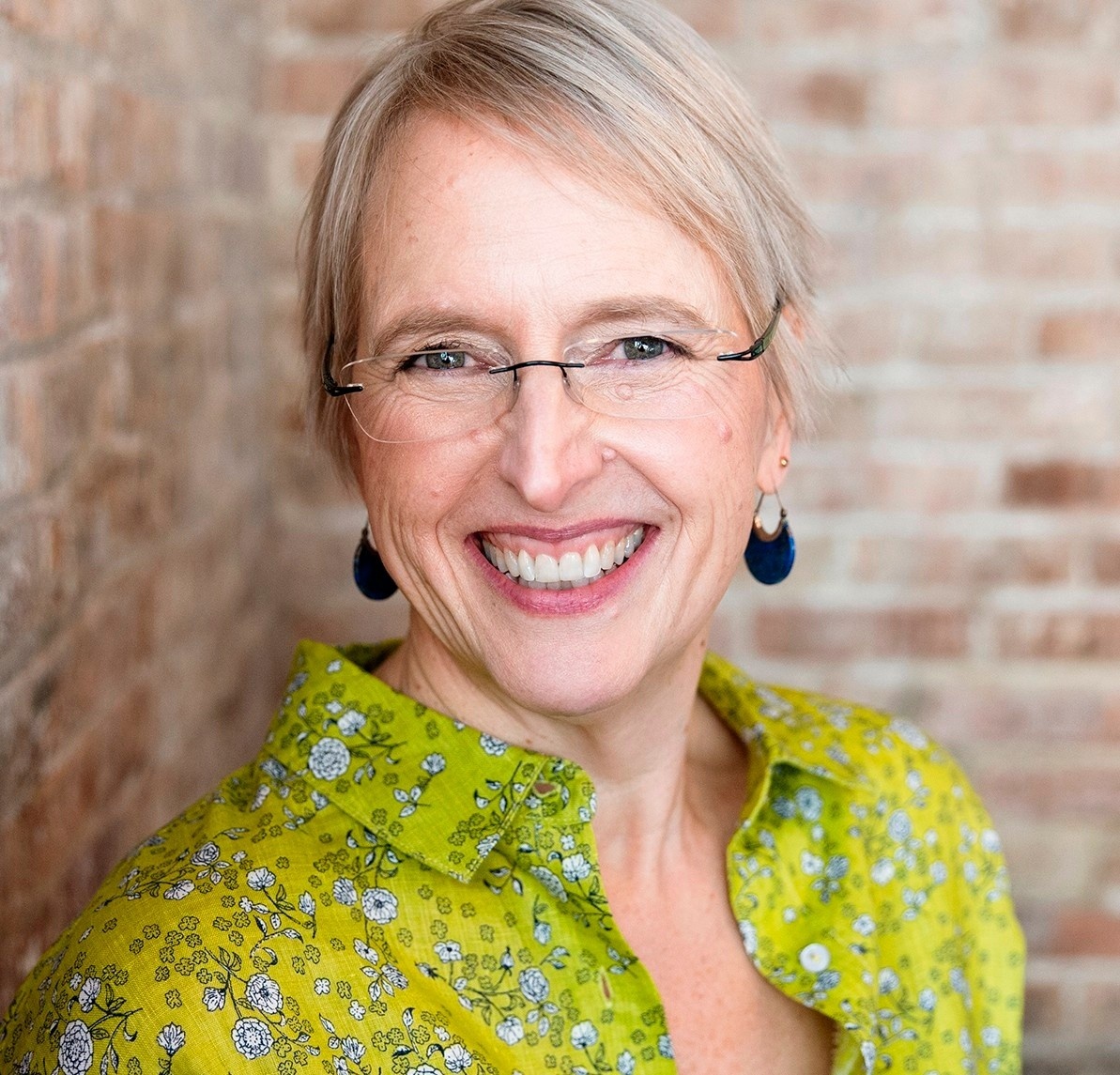
AASECT-Certified Sex Therapist, Author & Educator Founder, Institute for Relational Intimacy
Martha Kauppi is an AASECT-certified sex therapist, relationship educator, and clinical trainer who specializes in intimacy, attachment, emotional regulation, and ethical non-monogamy. With decades of personal and professional experience, Martha works at the intersection of psychology, sexuality, and nervous-system awareness—helping people build relationships that are not only ethical, but emotionally sustainable.
Martha is widely known for her work supporting consensual non-monogamy and polyamorous relationship structures, both in the therapy room and through professional training. She is the author of Polyamory: A Clinical Toolkit for Therapists (and Their Clients), a groundbreaking resource designed to support therapists, coaches, and individuals navigating open relationships with clarity, compassion, and skill.
In addition to her clinical work, Martha trains therapists internationally, helping mental-health professionals move beyond pathologizing frameworks and toward more inclusive, evidence-based care. She also co-hosts the podcast Untangling Intimacy, where she explores real-world relationship challenges, desire, consent, communication, and emotional complexity through the lens of sex therapy.
Martha’s work is grounded, validating, and deeply human—focused on helping people understand themselves, communicate honestly, and create relationships that actually feel safe, connected, and alive.
Website:
https://www.instituteforrelationalintimacy.com
(Also forwards from: https://www.helpmecom.org)
Podcast:
Untangling… Read More