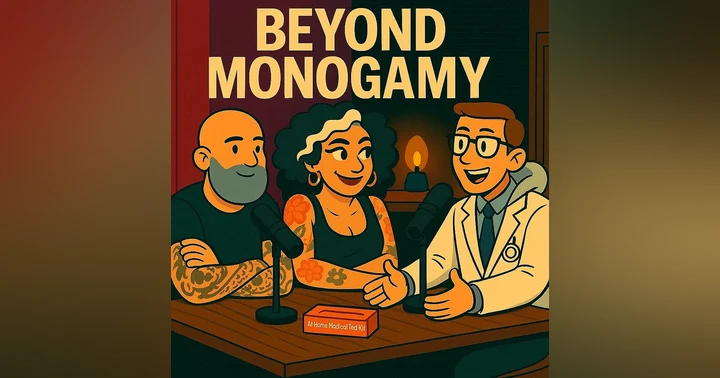

No Clinic, No Shame, No Excuses: At-Home STI Testing with Dr. Andy Kogelnik of ProDX Health
An MD, PhD, and infectious disease specialist sits down with Adam and Pris to talk about the one thing the lifestyle can't afford to ignore — comprehensive, convenient, stigma-free STI and hormone testing you can do from home.
Episode Summary
Adam and Pris open with a confession: testing is something their community talks about in theory but often dreads in practice. Between clinic appointments, waiting rooms, insurance paper trails, and the anxiety of going in at all — the system has built more barriers to testing than most people can realistically clear on a regular basis. That's exactly the problem Dr. Andy Kogelnik set out to solve.
Dr. Andy brings serious credentials to a conversation the lifestyle community often handles informally. An MD from Emory, PhD in bioengineering from Georgia Tech, trained at Stanford in infectious diseases, and founder of the Open Medicine Institute, he pivoted the same lab infrastructure he built during COVID into ProDX Health — an at-home STI and hormone testing service that is CLIA certified, doctor-reviewed, and delivers results in 24–48 hours. No appointment. No waiting room. No insurance claim.
The episode covers the science behind the kits in plain language: how a fingertip-sized blood collection device (no big needle, no clinic visit) and simple swabs can test for up to 13 pathogens at once — including the lesser-known but increasingly common Mycoplasma genitalium (MGEN), as well as oral and rectal-site testing that most primary care doctors simply don't order. Dr. Andy explains why the panel your regular doctor runs is probably too narrow for anyone who plays with multiple partners, and what you should actually be asking for.
The conversation takes an unexpected turn into PASS certification — the gold standard that governs testing in the adult film industry. ProDX is the first lab ever to offer PASS-certified home testing, complete with facial verification, tamper-proof sample authentication, and molecular profiling to prevent sample substitution. It's a level of rigor most clinics don't come close to matching.
Privacy is a major theme throughout. Adam asks the questions the lifestyle community actually wants answered: Does it show up on my medical record? Does the packaging look suspicious? Can I stay anonymous? Dr. Andy addresses all of it — including how group result-sharing works for event organizers and play partners — before closing with the story of why he built this in the first place.
Adam and Pris close with a personal promise: they're doing the test live on a future episode and walking listeners through the whole process. Consider this part one.
Key Takeaways
- 42% of STIs present with zero symptoms — testing is the only way to know.
- Most primary care doctors run a limited panel that doesn't cover all relevant pathogens for sexually active people with multiple partners.
- MGEN (Mycoplasma genitalium) is on the rise and requires 2+ weeks of antibiotics — many doctors don't even test for it.
- Oral and rectal sites need to be swabbed separately — genital/urine tests alone will miss infections in those regions.
- ProDX uses a tiny shoulder patch device to collect blood — no clinic visit, no phlebotomist, no big needle.
- ProDX is the first lab to achieve PASS certification for home-collected samples, including facial ID verification and molecular profiling.
- Testing can be done completely anonymously — no insurance claim, no medical record, discreet plain white box delivery.
- Kits are stable at room temperature for 10 days in transit — no cold pack required.
- Group result sharing is built in — perfect for event organizers, partner groups, and play dates.
- STI rates hit 25-year highs just a couple of years ago and have only plateaued — not dropped.
Chapter Guide
- 00:00 — Intro & Content Warning
- 01:00 — Why This Episode Matters & Guest Introduction
- 03:00 — Dr. Andy Kogelnik Joins — ProDX Health Overview
- 04:30 — How the At-Home Kit Actually Works
- 07:30 — STI Rates at 25-Year Highs — Why We Need to Talk About This
- 08:00 — 42% of STIs Are Asymptomatic — The Silent Spread
- 09:00 — Why Your Doctor's Panel Probably Isn't Enough
- 10:00 — 9 STI Kits Explained — Finding Your Risk Level
- 12:00 — MGEN (Mycoplasma genitalium) — The New STI on the Block
- 13:30 — Throat & Rectal Testing — What You're Likely Missing
- 16:00 — The Pro13, Full10, and How to Stack Kits
- 18:00 — The Blood Collection Device — Tiny, Painless, No Needles
- 19:00 — What Is PASS Certification?
- 21:00 — ProDX Is the First Lab to Enable PASS Testing at Home
- 22:00 — Facial Verification, Molecular Profiling & Anti-Cheating Tech
- 24:00 — 📢 AD BREAK — SDC.com
- 24:30 — Privacy: Anonymous Testing, Discreet Packaging, No Insurance Trail
- 27:00 — Shipping, Turnaround Times & Sample Stability
- 30:00 — Hormone Testing — What's Available & What It Tells You
- 33:00 — After Results — Prescriptions, Treatment & Doctor Handoffs
- 34:00 — Result Sharing — For Partners, Groups & Events
- 35:30 — The Blood Collection Device Demo (Live on Camera)
- 39:00 — What Happens If You Test Positive
- 40:00 — Event Partnerships — Buying a Test When You Buy a Ticket
- 41:00 — How ProDX Came to Be — COVID, Innovation & Origin Story
- 43:00 — Upcoming: Adam & Pris Test Live on a Future Episode
- 44:00 — Closing Thoughts, Resources & Call to Action
About Dr. Andy Kogelnik
Dr. Andy Kogelnik holds an MD from Emory University and a PhD in bioengineering from Georgia Tech, with fellowship training in infectious diseases at Stanford. He founded the Open Medicine Institute to bring precision medicine to chronic illnesses that mainstream healthcare often dismisses — including Long COVID and fibromyalgia. During COVID-19, his team built mobile testing infrastructure, deployed CLIA-level labs in Hawaii airports, and developed the at-home testing technology that became ProDX Health. ProDX offers 9 STI panels and 11 hormone panels with CLIA certification, doctor review, 24–48 hour turnaround, and is the first and only lab to achieve PASS certification for home-collected samples.
This Episode Is Brought to You by SDC.com
SDC.com has been connecting open-minded adults for over 25 years. Whether you're brand new to the lifestyle or a seasoned player, it's the place where your people already are. Just make a profile and go explore — no weirdness, no judgment, just a ton of like-minded humans living their lives, just like us. Honestly, it's kinda fun just to poke around.
Go sign up at sdc.com and use code 38236.
Links & Resources
- prodxhealth.com — ProDX Health (all kits)
- getpro13.com — The Pro13 Kit (adult industry standard)
- sdc.com — Sponsor / Use Code: 38236
- pass-certified.org — Learn About PASS Certification
- beyond-monogamy.com — All Episodes, Merch, Events & The Confessional
- fullswapradio.com — Stream Beyond Monogamy Live
Find ProDX on social: @ProDxHealth on Instagram, X, and Facebook.
Upcoming Event
June 20th — Beyond Monogamy at Club Eden, San Antonio, TX
Get your test done ahead of time. With a 24–48 hour turnaround, you'll have results well before the party. 😉
The Beyond Monogamy Confessional
Whatever's on your mind about the lifestyle — a question you're afraid to ask out loud, a story you need to get off your chest — drop it at the confessional. It is 100% anonymous and Adam & Pris read every single one. Nothing is too out there.
👉 beyond-monogamy.com
If this episode moved you, pass it on. Send it to your play partners. Drop it in your lifestyle group chats. Post it in your swinger Facebook groups. This is the kind of conversation that makes the whole community better — and more people need to hear it.
Subscribe on Spotify | Apple Podcasts | Leave us a 5-star review ⭐⭐⭐⭐⭐
0:07 All right, y'all. Before we dive in, a quick heads-up This show is raw, real, and definitely not rated PG. We're talking about adult themes, sexual content, and the kind of stuff you probably don't want blasting through your speakers at work or around your kids. So grab some headphones, pour your drink of choice, and get comfy. Oh, and just so we're clear, we are not licensed therapists, counselors, or sex couches. Sex coaches. Sex coaches. Not sex couches. We're just a couple of people sharing our lives, experiences, and sexy adventures in ethical non-monogamy. So with that, pull up a chair and enjoy the show.
0:51 Hello, and welcome to another episode of Beyond Monogamy. I'm Adam. And I'm Pris, and I am so excited to have today's guest. Yeah. Yeah, she has been excited. She came to me last night and she was like, "Babe, are we recording tomorrow?" I'm so excited. Yeah. Because this one matters to me personally. This is the conversation that I think our community genuinely needs and doesn't always get. That's true. And this one is extra special because our guest today is the f- first person that Susan Bratton has ever personally referred to our show. So that alone tells you something because, we love Susan Bratton. Yeah. Yeah? Yeah. Okay, so if you're brand new here, welcome. We are so glad you found us.
1:32 Everything Beyond Monogamy lives at www.beyond-monogamy.com. Every episode, video clips, guest bios, merch, events, all of our social media, and of course, the Beyond Monogamy Confessional- It is- ... which is 100% anonymous absolutely. Yes My favorite. Whatever is on your mind about the lifestyle, you be sure and drop it at the confessional. But also, do us a favor, hit subscribe, leave us a five-star review because you know that this is a great show, on Spati- Spotify, on Apple Podcasts, and share this episode with somebody who needs it because I guarantee you, after you hear today's show- Yes you know somebody who needs it. Yes, Yes, yes. Okay? So with that, uh, our guest today is an MD from Emory, PhD in bioengineering from Georgia Tech, trained at Stanford in infectious diseases, founded the Open Medicine Institute, tackling some of the most dismissed chronic illnesses out there, long COVID and fibromyalgia, just to name a couple, and brought real precision medicine to patients- that the system kept ignoring.
2:35 And now he's built something that I think is gonna become a staple in this lifestyle community. Mm-hmm. He's the founder of ProDX Health at home STI and hormone testing that is CLIA certified, doctor reviewed, results in 24 to 48 hours, no appointment, no waiting rooms, and this is the big one, it's the first home collection STI kit to ever receive PASS certification. For anybody who's watched as much porn as I have- ... that's the same standard that the adult industry runs on. Really? So that's pretty impressive. Wow. So with that- Yeah ... please welcome Dr. Andy Kogelnick to the show. Hi, doctor. Welcome. Hey, doc. Thank you. Good to be here. Welcome. I'm super excited to have you here.
3:17 Um- Thank you. Thank you ... I found you on Instagram, and it was super interesting because I think I actually saw someone use your test, and I was like, "This is not real. This can't be real. Is it real?" I did some digging- It's real ... and I rem- I remember sending it to Adam, and then Susan mentioned you, and I was like, "Yes, I know who they are." Yeah. You know, uh, I truth be told, I hadn't heard except for when she had mentioned it to me. Uh-huh. And then when Susan brought it up, that's immediately, in the show as a matter of fact, she turns to me and she goes, "Yeah, that's... I saw that." Yeah. And I was going, "Okay." So as we talked about it more, and Susan said, "You gotta talk to Dr. Andy. He's the best."
3:57 Yeah. Yeah. And so we started doing more research on it, and man, I gotta tell you, my eyes are open. Yeah. Now, I know I sa- I discussed a little bit of it in the intro, but can you break down to us, y- so you basically have... It's a, it's a mail-in kit essentially, yeah? Exactly, yeah. We spent a lot of time, uh, a lot of it during COVID when we were going nuts trying to get that stuff done, thinking about how to, one, deliver tests at home, 'cause for obvious reasons during COVID, but that also got everybody else thinking about it. And part of the ability to get there was thinking about the technology we were using and how that could be applied back into STIs, and shrinking everything down into one little box and getting people to be able to handle, you know, doing their own sampling at home, and including the blood.
4:49 And the blood was a big step, and we have some great partners there who've given us some FDA-approved shoulder patch devices that collect your blood in about five minutes. That was a big step forward. We started off with lancets, and that was ugly. But the biggest part of the story was really shrinking everything down so it fits in a box and s- you don't have to have five vials of blood drawn. You don't have to ha- you know- Go screaming across town, uh, to the doctor's office, that you can do it all from home in your slippers and, you know, drop it, drop it in the mail basically back to us and get, you know, get a reasonably quick turnaround on it, uh, without having to go through the stigma. I, I always say we, we're trying to take ST- uh, the stigma out of it, or STI out of the stigma.
5:31 Which way I went? I like the... Yeah, I mean- We certainly didn't put it in there, that's for sure. Y- y- yeah. Well, yeah. I mean, in our community, um, it's... Testing is very big, and it should be in anybody who's sexually active, right? But in our community, they are very sexually active. And it is, uh, it's... Sometimes it's a hassle. You know? You have to make an appointment, or you have to make sure the clinic is available, and- Yeah ... you have to make time. I am a busy person. I work out of my home, not in my home, but I work away from my home, 45 minutes away. I don't have time. I work Monday through Friday, and then we have businesses. It's really hard for us to make it out.
6:13 We do it, but it's really difficult. It's either at lunch, you know? So, the fact- Her issue is the time. My issue- The time ... is anxiety. I can't stand going to doctor's offices, Doc. Yeah. Uh, it's not for me. Oh, I believe it. Uh, and so especially, uh, since you have y- we have to test regularly because of the you know, the community that we're in. Mm-hmm. That anxiety of constantly going in and just h- and just feeling that. Uh, not only that, but people really in our community have trouble talking about testing. Yeah. Oh, very much. Um, which is so f- so strange because we're in this community and we're all pretty much regularly having- Mm-hmm ... sex with, uh, our partners- Mm-hmm ... if not others.
6:54 Uh, you would think that there wouldn't be a, a negative stigma attached. So this is really why we wanted to have you on here. We wanna remove that negative stigma. Now, I, I am curious, though. As I was doing my little research, I noticed, uh, that you really, uh, you're, you're really in the adult entertainment and, uh, industry as well as, uh, the non-monogamous industry. Is that right? Like, that's really where your forefacing, uh, is. We're kind of all over the place, but yeah. We absolutely have a huge footprint on the adult side and the sex positive side in general, and that's, that is part of what we're trying to enable here, right?
7:36 It's a conversation about doing what you wanna do and doing, you know, your thing, but doing it safely. Uh, you know- Yeah ... all, all of the diseases that we test for in all of our kits, you know- couple years ago were at 25-year highs and, and most of them have only plateaued from there and not gone down yet, which is crazy and scary that we're not having more conversations about testing all the time. And the other, the other s- statistic that I throw out there for people because it's... people don't think about it, and, and literally they don't think about it, 42% of STIs are asymptomatic. So 42%- Wow ... of the cases out there, people don't even have a symptom to go complain about to the doctor, and that- that's part of the reason why they spread so easily is that people, you don't know unless you've tested.
8:27 And so people have this assumption that they're, if they're feeling okay, they're, they're good, or it's not... You know, we see all the reactions, believe me. I- we've seen them all at all the conventions, at, on the street, in the clinic. "Oh yeah, I'm, I'm good, you know, I... What..." You know, you don't know unless you've actually tested. And what is your, um... I know that testing's important, but what do you te- Does your test do anything different than going into an in-clinic place? Are you testing for something different? Are we missing something not getting tested at a clinic? Well, and you know, and I actually had heard, and I don't know, maybe you can confirm this, Doc, but I had heard that most doctors, whenever you go see your primary care physician- Mm-hmm or whomever your doctor is, and you tell them, "Hey, I'd like to test," they give you a, a, I don't want to say a dumbed-down test, but kind of a, a, a, a test that doesn't- A small little panel ... yeah- Mm-hmm ... that doesn't really test for everything.
9:19 Is that right? The... Probably is the short answer. ... The answer is whether your doctor or your provider were actually listening to your level of risk. Right? It's your level of risk that determines what and how frequently you should test. And so for what we do on the adult industry side, and probably for many of the swingers, but again, it depends on what you're doing, but certainly for the adult industry side where they're having shoots, you know, every two weeks with different partners and so forth and, sometimes more frequently than that the level of risk is high, and it's high across the board. So you wanna test for everything. And those standards were developed, uh, o- over a decade ago for very good reasons on the public health side and, and have been adopted by many outside the adult film industry.
10:09 But, you know, we have nine different STI kits, and they all essentially correspond to either a, a screening level or a risk level depending on what you're doing, and, and you can kind of use them and combine them any way you want. This one's our, our Pro13 which is our bigge- kind of our biggest one. It's the one that we use for the adult film industry. And it has literally everything, but it doesn't, right? It doesn't have herpes in there, for example. And but it does have, you know, hepatitis, HIV chlamydia, gonorrhea, trich. And MGEN is one of those that probably your doctor is not gonna order, but it's been a, a, a disease that's been on the rise for about five, six, five to 10 years now.
10:51 Um- I just heard that one. I think Susan told us. Well, Susan- Yeah ... had mentioned MGEN. Wow. Yeah. Okay. Yeah. And so a lot of people don't even know about it. Some of the physicians don't even know about it and to even think to test for it regularly. So again, if, if you're in a higher risk, group of, for any reason, you just, you should be testing more, and you should be testing more comprehensively, and you should be asking your providers for those comprehensive tests if they're not giving them to you. You know, you don't, you don't have to get them from us certainly. Um, everything that we test for is available somewhere, but the question is how do you, how do you access that? And part of our mission was to just lower the barrier to testing, like lower the barrier to entry. We've, you know, we've done a lot to make our tests, you know, better, faster, and cheaper, and more convenient certainly by doing it at home and removing the stigma, which you've already mentioned.
11:41 We also do some stuff with public health agencies and so forth to, to provide free testing in some venues. Any way we can kinda get in there and deliver a test it's a win because, literally everybody should be tested. Mm-hmm. Um, unless you are truly, truly, truly, celibate or 1,000% monogamous and you know that your partner is as well. And that's, that's the other side of that coin, you know, that, you know, that's a whole nother, uh, rabbit hole to go down, uh, of- ... of, you know, what, what else is going on there. So you don't know until you test. Doc, I got like four different questions, but I'm gonna start at the top. Whoa. For our listeners MGEN is Mycoplasma genitalium.
12:25 A lot of us don't know what this is. I have no idea what that is. Can you tell us what you know about MGEN? Yeah. It's, I mean, it's, it's a bacteria. It's a kind of a, a, a little bit more of a fastidious, slow-growing bacteria, so it can be pretty stubborn to get rid of. Mm-hmm. Um, which has been one of the challenges, uh, in the community. You know, s- the standard treatment is two weeks of antibiotics, unlike chlamydia or gonorrhea, which sometimes you can treat with a single dose of, of an antibiotic. And, and even at two weeks, sometimes you have to treat it again for yet another week. So it's kind of a super sticky bug. It's not super common, but there, there are breakouts, and there have been breakouts, in various corners of the community.
13:08 And so when we, when we identify one of those, obviously we like to shut it down as quickly as possible. So notifying your partner to get tested and so forth, that becomes super important, especially for this bug where it's, it can kinda sit there and, and be stubborn to get rid of. And, you know, if, if you don't treat it all the way, you know, you may have even picked it up, but then you're passing it on after all, uh, because it didn't get treated completely. Right on. Okay. So it's, it's definitely the newcomer in the, on the block. Yeah. Yeah. Yeah. We've only, we've only recently, uh, heard of this. Mm-hmm. So that was, that was one. The other thing was and when I was researching this, uh, uh, about your tests, it, there was a, a, a part about throat and rectal testing.
13:52 Uh, now it, it, this is, uh, obviously big for our, our, uh, listening audience because oral and anal play are extremely common in this lifestyle. I didn't even think about that. I knew throat, but I didn't think about rectal- Yeah ... at all. Yeah. Yeah. Okay. So, uh, so this is a part of your test. If, if you wouldn't mind breaking that down for us. Wow. Yeah, sure. Uh, well, the asymptomatic rates I think are a little bit higher in, uh, in rectal, uh, as, as well, so that's another one where you don't know until you test. But yeah, we have several kits now that actually have multiple site swabs. Um- Mm ... the basic kits do o- uh, genital or urine and blood.
14:34 Um- Mm-hmm ... and then the more comprehensive kits will have a swab that you do an oral swab with, a swab that you do a rectal swab with. And y- sure, we h- it happens all the time where we pick up somebody who's got oral gonorrhea, for example, or, or, uh, rectal chlamydia. And, um, everything else tests negative and that, like I said, that happens all the time. But again, it's like the partner needs to be treated, or partners, and, you know, you, you've gotta kind of get after those. So y- you know, the, those kits with the multiple swabs let you get that information and know that, that you're being safe in those regions as well as blood or you know, the genital area.
15:15 Yeah. I didn't even... That didn't even cross my mind. Yeah. Yeah. You know, most of the people that I know that, that test, it's, it's usually by urine and blood. Yeah. Yeah. Yeah. And, and- That's usually normal, right? I mean- ... people are, you know, people, some people are squeamish about the rectal swab. Uh, but it's really not that bad. It's a teeny little, teeny little swab. Little tiny little thing. And you, you don't have to go in very far. It's not like you're doing a colonoscopy or anything like that. Yeah. Yeah. Um, Well, a- and, and so, uh, one of the other questions that I had was as far as... 'Cause you s- you had mentioned, uh, you have how many different tests? We have, I think, nine STI tests now and- Nine STI- ... 11 different hormone panels, and we're moving into some other general health stuff as well.
15:57 Um, so with all of those tests, it- is there, uh, I guess there's not one that h- that handles, like, everything or, like, an all-in-one or- Do you have different kits? Do you have different kits, right? Yeah. Okay. So the, the kits, they, they look pretty similar. They're slightly different sized boxes. But the Pro13 adheres to the standard that was set out for the adult industry, so it's pretty much got everything, like I said, except for the, the two herpes and HPV. People forget about HPV all the time too, but that's an STD as well. Oh, yeah. We've got a kit for that. Um, we've got a kit for the boys for STD too, so not just the ladies. So the second closest one, uh, is o- one that we came out with early on called the Full10.
16:38 So the numbers refer to how many things we're testing on that panel. Okay. Um, and the Full10 covers the two herpes viruses and a whole bunch of other things, but of course there's only so much blood we can draw, so we had to leave off a couple of things, and that is a limitation on what we do. But you can always combine tests to get there too. So you could do, like, a Pro13 and our Focus2, which is our herpes test. Uh, you could order two kits, and you get two ways to s- to sample essentially. Okay. Um, and, uh, we get the samples in the lab that we need to give you those answers. So that- that's another way to go around this. Part of that is because we're not sticking a big needle in your vein, and we're not drawing out five tubes of blood, so we can't just endlessly test until, uh, that's exhausted.
17:24 We actually have a tiny little tube of blood. You know, I'll, I'll pull one out of the kit. It's only about a microliter. Oh, wow ... yeah, so it's this tiny little tube. This is it right here. And- Oh ... it is, you know, it's a- about two and a half centimeters, three centimeters long. Um- Okay ... and we only fill that up for the Pro13, we only fill it up halfway. For some of the hormone tests, you, you fill a, a red-topped tube up all the way, but, uh, it, it really is not very much blood, and that's, when I mentioned before, get- fitting it all inside the box, it was literally how do we make these tests smaller and smaller so we need less volume so we can let people sample at home?
18:06 And that was, that's part of the magic of what we're doing rather than sending you to a clinic and having to have some- specialist there to phlebotomize you or a nurse or what have you. Yes. Um, you know, you can do it at home. And people get nervous about that, and we, we get a lot of people really anxious about it. And then once they've done it, universally the comment is, "Oh, that was so easy." You know, "Oh, that's all it was? I didn't feel a thing." You know, that, that kind of stuff. So it's, it's actually been fun to watch for a change, uh, sort of a positive reaction on, you know, a, a, a healthcare intervention. Yeah it's super easy and people don't need to be afraid of it. We've got some videos and stuff online that you can watch.
18:46 But it really is, is super simple a- and it's intended to be that way, and we're actually working on some things to make it even simpler. Oh, wow. Now, y- Adam had mentioned something in your intro. What is PASS certification? I know that you had mentioned that, and I know that's a big thing, and I've seen it before on, like, other platforms. What is that? Yeah. Yeah. That's a really good question. PASS is, is mainly relevant to the adult film industry. So PASS is- Okay ... a nonprofit organization. It's pass-certified.org, and they have for the, at least the last 10 plus years created and maintained the standards and maintained the studios agreeing to those standards for testing and for laboratories.
19:32 So they certify, I think there's about six of us now, uh, six different labs that are certified to do the PASS panel. And part of the reason that's there i- is, one, to set the pace of what should be done and how often it should be done and sort of the rules around that, but two, to evaluate and standardize the labs in terms of what we're doing, or at least make sure we're all at a minimum standard, 'cause we certainly don't do everything exactly- Uh-huh the same way. Um- Right ... but that we pass that minimum standard to ensure safety in the industry. And, and PASS regulates when there's you know, when something happens that there's an industry shutdown among other, uh, besides the testing, and says, sort of gives the all clear for, okay, people can start to shoot again, and people start to test again, and so forth, uh, for those shoots.
20:22 So it's, it's an organization that's just really amazing for the size of an organization it is to be able to take on that responsibility of keeping a very large and growing number of, of individuals safe. Wow. I, I'm curious. Would that, Would a, a test from you guys essentially replace a clinic visit for PASS? Yeah. It's, it's n- it's not quite as easy as it sounds, but it is still pretty easy. So we're the first lab to enable- anyone who wants a PAS certification on their test to not have to go into a clinic. And to be able to do that, we- PAS made us jump through a bunch of hoops, and then we actually heard and had a big trust conversation with a lot of folks in the industry, and raised the standard even further.
21:13 So we actually are the only lab that I'm aware of that has additional metrics literally that, uh, the performers have to, have to achieve to get a PAS certified test from us. Um, so we have a whole process the first time someone uh, f- this is for the adult performers. This, the, the- Mm-hmm ... lifestyle people, it's a trust kind of basis. But for the adult performers, PAS wanted us to observe the first blood collection, and so we did that with a televisit. So you sign up for a little televisit, and we get on a little Zoom-like thing with you. And we help you through that process 'cause it's not necessarily fully intuitive. But like I said, most people say, "Oh, that was su- super easy."
21:56 But then we also watch people do their oral swab, and they have to seal that oral swab into a tamper-proof bag. And before they've done the televisit, they've actually uploaded their government ID, and we do a document check on that. I don't know any clinic that does a document check on- ... on, uh, people walking in the door. They're lucky if they ask you their name and their, your date of birth. And then we do actually a facial profile off that document to make sure it's, that's the person on the televisit, so those have to match. Um- Oh, wow ... and then we're tying that oral swab that we just took to tho- to that identification, that authentication, and building a molecular profile of that person. So all their samples have to match, and that's how we make sure there's no cheaters in the industry.
22:41 So we would see that, oh, this is your dog's urine or your neighbor's urine or what have you. Um, and fortunately we, we don't have many of those incidents, but you know, obviously when we do, we don't allow that person to test, and that's, they're called out in a certain way in the industry and pretty much banned from the industry. But- Wow ... it's really a, a really important part of what we're doing to build trust in the industry, and I think it's relevant for, the poly community as well. You know, there's a lot of trust going on, and I think that's amazing, but there's also a lot of, of loose ends that are flapping out there- Mm-hmm. Mm-hmm ... in the breeze, and we, we're, we're here to help tie some of those up with some of this stuff. So hope- hopefully we can continue to have that conversation in all the different corners of, of the lifestyle.
23:27 That is, that's- Yeah. That's, um- That is a lot ... you're doing some incredible stuff there, doc. Uh, you know, I'm- A lot of science nerd stuff. I spent too much time in school, as you pointed out. I'm kinda curious though, like, as, as, because- you know, we in the lifestyle we are a private people. Yes. Uh, well, I mean, not us- I was gonna ask ... not us personally. Yeah, not us, But, uh, but yeah, there's a lot of people who are very discreet, uh- Absolutely about certain things. Yeah. Uh, now, as far as that's concerned how does ProDX protect, you know, from, um, stuff showing up on a medical record or- Yeah ... showing up on an insurance claim- Sure ... stuff like that? So we, we are starting to do some stuff with insurance, but, but by and large, most of what we do is, is cash pay or it's funded by an ins- an organization.
24:14 Okay ... if you're not doing it for past reasons like I just described, we don't have to know who you are. You can be- Mm-hmm ... fully anonymous. You can say, "I'm, Jimmy Dean," and we'll give you a result. Because, the moment where we can't do that is when we have a positive, then there's a process that has to happen- Mm-hmm because a lot of these diseases are reportable which is a, a legal requirement in this country. And well, it's really county-based, uh, but, but most counties have pretty similar res- re- reporting requirements around that. So you can come and get your test anonymously. Um, you can purchase it online anonymously, other than that you have to, uh, put a credit card in at some point, or PayPal or something like that.
24:59 But, and you can come by our office and pay cash, I guess, if you wanted to. We may eventually start doing something with crypto and allow people that way but certainly once you're in the database- Mm-hmm ... um, we run our own servers, so we actually don't allow any third parties in there for exactly that reason. So we wanna keep it secure, we wanna keep it anonymous, we wanna keep it private and confidential. We don't sell our data, we don't sell our samples like some labs do. Um, so none of that is going anywhere. And the profile that I mentioned, even for the adult side, we don't even store that. We store a, a hashed version of that, a mathematical hash that we can't go backwards on, so we just know that they match.
25:39 We don't know that like the genetic... We don't know your genetic makeup and we can't- Mm-hmm ... you know, if we're subpoenaed, we can't give that data to anyone 'cause we don't have it. So- Okay ... it's... we put a lot of thought into maintaining that privacy and really protecting you know, the people who want to know their own results and be safe, um, but also be, be private. So we recognize that there's a lot of, a lot of stuff in the- Yes ... in the world around us and we don't wanna get people crossed up in that. So I know that you- It's mailed to you, right? Right. You order it and it's mailed to you. Does it come in a, like a ... Does it come, like, in those black bags where nobody knows what, what it is?
26:22 Or is it that discreet? It's discreet packaging. Yeah. I mean, I don't- It's a white box ... does anybody even care? A white box. Okay. So it's a plain white box. The only thing it has on, on the side is a barcode so we know which one it is. Yeah. Um, so unless you know a lot about us, you're not gonna get much information off the outside of that. Every... Other than that, it just comes in a, in a FedEx, uh, bag- Okay ... or we use UPS or Post Office as well. The only real identifying mark inside is this little guy, which is a QR code, um, which is unique to this kit. So that's what you scan to register this kit to yourself so that we know where to send results to, uh, right? You, again, you don't have to tell us who you are, but you do have to tell us how we're gonna communicate with you.
27:04 Um- Yeah ... so that, that's the way we do that. And so once I've done my testing- Mm-hmm ... and I've, I've, you've collected all my blood and all that good stuff, we mail it off, how fast does that come back to us? Like, the results? Well, it- Yeah, what's the turnaround? ... depends a little bit on you. Um- Okay ... and, and I'll plug before we get to the re- return we encourage people to get a kit on th- on their shelf, because they're good for a year on the shelf. So you can just pick it up off your shelf- Oh, wow ... and test whenever you need to. So, and that way you're not scrambling at the last minute, "Oh, I had, exposure to somebody and I need to get tested," or, "I'm having symptoms. I need to..." Just have the kit there. It's so easy. That way you don't have to rush to get it. Mm-hmm. So once you have it and you use it there's three options to come back to us.
27:45 One is overnight, which you have to pay a little bit of extra for, of course. One is two-day, which is pretty quick. And the other is a three-day, which usually is a three to five-day kind of turnaround. Okay ... our kits are good in the mail for 10 days, so even if the, you know, the k- mail carrier screws up, um- That's what I was gonna ask. Yeah, like how good are the samples for? Yeah. You know? I mean, that's another big piece that we worked on a lot, uh, especially th- thinking about it during COVID and after COVID. Mm. Um, you know, how can we make this simple, right? Well, one way we made it simple is you don't need a refrigerated pack, right? You're throwing it- That's awesome ... at ambient temperature, room temperature, into the box and sending it back to us, right?
28:27 And so we had to test it at different high temps, different low temps, and all that kinda stuff to make sure that, that the science would work. Um, it's not magic. It's, it is actual science. Um- Yeah And, you know, we had to run through a lot of different scenarios to make sure that we're covering all the bases, and every time we do a test, we can deliver it the right way. Um, so- That's awesome ... to answer your question, your original question- ... then you get a result. When we've got the results in the lab, we push them back out to your account however you registered for it. So- Okay ... typically, it's gonna come to your phone, uh, as a, as a notification or your email, and then you click through that into the secure portal to get your results, and you have to, obviously, there's two-factor authentication and all that kind of good stuff to make sure that you are you and somebody else isn't coming in and getting your results.
29:15 Yeah. But yeah, it comes right to your phone. Yes. Just, just like the box- Get seeing the results ... comes right to your home, this comes right even closer. Nice. Wow, that's, that is really cool. Now- And, and the only way to, uh... Like, we're in Austin, Texas. The only way to find it is through the website. Is that correct? Yeah. At the moment it... Well, there's, there's sort of two ways to find it, I guess, at the moment. There's online at prodxhealth.com or you can find the Pro13 at getpro13.com as well. Or at, we do a lot of conventions, so people can actually buy a kit at a convention and shows, and, uh, they can test right there and drop it off with us, and we'll, we'll have the results by the stage and- Oh. Oh, man ... at most of the- Yeah ... most of the conventions that we're doing. That's a- That is genius ... really- That's just super convenient.
29:57 And so I know that- Um- I know that you also test for hormones, right? Yeah. Yep. That hormone testing. Exactly. That's sick. Yeah, it's a good process, and we're, we're open to, to bring all this to Amazon, but there's a lot of regulation stuff that we're still working through. I'm sure. But, Hopefully find us there soon. Yeah. So, so- But the hormone stuff is great. It's same principles different tests, slightly different tubes, so it's a slightly different kit. But same principle. You get it back to us. We get it back within 24 to 48 hours. Oh, you see, guys? Y'all can test for your stamina. Well, so this, this part I really don't have a whole lot of knowledge about. You know, I, I've been taking, uh, health I don't know how many times in high school, and so I've, I've talked about STIs I don't know how many times, but this portion, I gotta admit, is a little rocky territory for me because I really don't understand a lot of it.
30:48 So what exactly do your tests test for on this end of it? Well, I, I, first off, I think a lot of people are in, in your boat there. Mm. And, and physicians even struggle sometimes with hormones and, you know, especially treating them because it's oftentimes a balancing act. So we have a l- a whole bunch of different panels out there. There's a men's and a women's health panel, which is sort of general health and h- you know, uh, uh, h- hormonal levels. There's ones for sleep and thyroid. There's ones for physical performance, like if you wanna max out your physical performance. There's ones for sexual performance. There's ones for uh, longevity and so forth.
31:29 So there's a whole bunch that are sort of symptom or go, you know, condition-focused. But then there's also some general health ones. And basically what they can tell you is, A, whether something is running low and abnormal in you, like say your thyroid, and, um, you know, we can point you in the right direction with, with that sort of thing, both in the short-term management and long-term. Or, s- in terms of sexual hormones and male, female hormones, those kinds of things. And a- all of them can be, tweaked in one way or another, whether it's through diet, through nutraceutical type of, of treatments, or through actual pharmaceutical type treatments that, that require a prescription.
32:09 You know, there's a lot that can be done and can be looked at, and there's a lot, especially, people don't take it... A- as we age, people take it for granted that, you know, "Oh, I'm 45, I'm 55, I can still do what I was doing when I was 25." Well- Yeah ... not always. No. I mean, sometimes, but all of a sudden you realize, oh, I don't quite do that same... And you can actually track some of those things and, and see them. And s- many of those things can be addressed in various ways if, if they're going too low, too fast, or too high, too fast and so on. So it's, there's a lot out there that can be looked at. Yes. So once- Yeah ... uh, say I wanna test to see what my testosterone levels are.
32:52 And so I go to the site. I, I order, ... I guess it's, uh, it's a, it's a panel, Yeah ... and once I get the results of that, it's just a matter of taking that to my doctor, my local doctor- 'Cause, like, is there a prescription? ... or- Like, do y'all offer that? Yeah. We're, we're doing some prescribing. We're not gen- generally doing the long-term care of it, but we'll start people off. So STI stuff we'll treat, you know, regardless. But- Okay ... but similarly, if some, for the HIV positive, for example, the new HIV positives that we find, you know, we'll get them on the road towards treatment 'cause that's a longer term treatment, and find them, help them find someone locally to, to manage that for them. And we kinda do the same thing on the hormone side.
33:34 Some of the things we can address right away or help them address if it's a non-prescription and get them to kind of find that balance. But some of them, you know, you want your primary care doc or somebody involved, uh, in the longer term, but maybe they didn't think to look, or you haven't seen them in five years or what have you. Yeah ... so this is a way to kind of reconnect you back into the, the healthcare system. That's, it's easy. Yeah. Yeah. It just seems really easy. I mean, it's super convenient, and it's easy, so Yeah, you know, and as- Well, and- ... as far as results, like do they stay are they a- available to us, like forever? Like- Yeah ... does it get purged? So you build your account, and we, we have an online portal, and you can go in there any time, um, you know, through our app or through the web app and download 'em, track 'em share a PDF out, especially on the STI side.
34:22 We encourage data sharing, um, so you can share with a group or your partner or what have you. Um- Oh, see, now that's amazing. Yeah, that is really cool ... so there's a whole nother, another conversation around that, yeah. Yeah. Yeah, because all I would think would be, "Oh, I'll... Let me screenshot this so I can text it to-" Yeah, I mean, 'cause that's what you think- Yeah ... and lots of people do, so I love that. So you offer that group sharing with- Yep within whoever- Exactly ... system. So we, we've done... You know, obviously we're doing that kind of stuff on the adult film side because there's groups of people getting together for a studio shoot or their own stuff, and, um, you know, it's, it's date focused often or timeline focused in some way. And you know, we offer a whole bunch of different ways to share that information.
35:02 So you can have a coordinator who's in charge of the whole group who's checking, or you can have just- Yeah ... everybody sharing with everybody. It's up, up to you how you wanna build that, but o- obviously it's all consent driven. Y'all have thought of everything. No, I don't know about everything yet, but we're trying. Um Uh, I'm pretty sure- We're open to suggestions ... you're thinking of more. But- I'm pretty sure you're thinking of more. I, I, I can see- So- ... the gears going. It's... Okay, so- No, but seriously, some of, some of these things come from you all, you know, from, from our, our cl- customers and clients and we love those 'cause those are a- usually the most, ef- effective o- suggestions and, and- Yeah. that hit a lot of people. Sorry, you were gonna say something. I can't wait. I mean, 'cause I all I'm thinking is a needle.
35:42 I'm thinking I have to inject- No, you don't ... a needle. No needle. And there's no needle. So how, how, how does this work, Todd? There's a, a hidden little lancet in the device. So let me get one of them out here. Actually, I've got one right behind me here. So this- I'm digging the hat. Yeah. And the hoodie. Oh, man. I gotta get my hands on that hoodie. We'll get, we'll get you, we'll get you swagged out. So this is the little, the little guy, um, that- Oh, wow ... that tube I was showing you goes- Mm ... right on the end. Okay ... but it's, it's tiny, right? You just put it on your, uh, shoulder or you can do it on the thigh as well or the, or the butt. And you push the red button, and over about five minutes it collects your blood. So it takes usually about two minutes for the first drop to come out.
36:23 But there's no needle in here. There's a lancet- kind of in here on the backside- ... Um, that pops out on a spring and then, uh, and then is retracted. So it just pokes you real quick. But one of the reasons why we do it on the shoulder is 'cause you don't have many nerves there. So some people- Yeah ... don't even know what go in, and, um, it's not, it's not making a big hole. I mean, it's gotta make a hole 'cause there's blood. Right. You know, we gotta get the blood out somehow. But, um, uh, it's not a very big hole, and usually it's gone within a, a two days or so. You know, occasionally there's some fair-skinned folks who it leaves a little bit of a mark. Um- Yeah ... but everybody's different and that's probably gonna happen if you get a needle in your, in your arm too, but- Either way, yeah. You know?
37:03 So if you know you're that, maybe you try it on your thigh or your- Yeah ... somewhere that's a little more hidden, your belly, uh, that kind of thing. So that little thing looks like the little diabetic little machines, right? Yeah. It's, it's- Okay ... similar principle. Um- Kind of the s- kind of the same concept? It's- Okay ... it's just, it's a single- Oh ... I mean, it's gonna clot over the, that, that incision that it makes from here. It's gonna clot- Yeah ... after a certain period of time. So you have, you know, the clock's ticking, and it's different for everybody a little bit- Yeah ... as to how fast you're gonna clot. So- Yeah ... our goal is to get as much blood out of here as possible. And that, that's one of the things that we do, like, on the tele visit. We'll coach you through it so that, the... you wanna warm up the area. So if you have a warm compress beforehand, that's good.
37:45 Or if it's not flowing real fast, you can put the warm compress over the whole thing, or a hair dryer, stuff like that. Um, you know, so if you- I clot really fast. Yeah. So, like, when I go give blood or something, I, my blood clots like- So you wanna warm up beforehand, warm that area. Maybe you're doing little s- little cur- curls and stuff or the hand and- Okay ... you know, maybe you ran up and down the stairs a couple times just to get your blood pressure up before you, uh- No. Warm up the body. Yeah. I'm not running anywhere, so. Yeah. None of us run. And- You gotta run from these guys. Ah. Yeah. What are those little guys? Oh, this is, uh, this is Trick.
38:26 Okay. Great And this is, uh, chlamydia Oh, look at that. They're not that cute, guys They're not that cute It's not that cute Yeah You know, you can, you can definitely say that you've got chlamydia on your desk Yeah. Well, we usually at the, the shows, we toss it at people and say, "Oh, you see how easy it is to catch an STD?" Oh my goodness. That is... Yeah. It's funny. That's hilarious, man And it's very true. I mean, it is easy to- That is everyone can catch one ... to catch one. Now, you know, I... We're gonna start to wrap up, but I, I... if someone in the lifestyle does happen to test positive for something through ProDx what's the process look like from that point? Yeah. So generally we are calling positives for most things.
39:10 We don't call positives for herpes because there's a lot of them. Um, and, and people usually sort of know what to expect there. So, but, but you're welcome to call us if you have questions on anything. Uh, but generally we'll try and reach somebody before we actually release that result. If we, if we can't reach you, we'll go ahead and release it and, you're still welcome to follow up with us. Generally speaking, we're writing a prescription for that person- Oh ... or connecting them to their local physician for that. You know, we wanna make sure that, you know, that positive gets addressed in the most appropriate way, and obviously there's, there's, uh, you know, contact tracing kind of stuff that needs to happen too. And, you know, the person is the only person who, who does that.
39:50 We've also built interfaces with, um, some of the groups we work with. So there's a couple of event groups, uh, The Play LA and a few others that have put us into their process for their events, and when you buy a ticket, you can buy a test, right? And they- Oh, wow ... they were one of the first ones to require testing. Um, and there's a, a number of others that have, have picked that up as well. But we actually f- feed anonymously the, those results back to them as well, by consent of course. But, um, you know, lots to be done there, where we've had a lot of really interesting discussions with groups on the East Coast and on the West Coast on how to do that. And everybody's... A lot of people's ideas are different, so we try to, uh, work with everybody on that. But again, it's back to the sharing part of, of the information.
40:33 Yeah. But you're the one that gets shared with first and foremost, and you control how that information gets out, Man, that is- I know that is so crazy. You know, uh, there's, there is one thing I gotta ask though, how did you even decide to go into this, like this specifically? Like, I mean, I understand everybody's on lockdown during COVID. What made your brain go, "Hey- What the hell am I doing? I need to be doing this well, I'm a, I'm a infectious disease doc by training, so, you know- Nice Oh ... STIs certainly are on the list of, of some of the more common illnesses out there in terms of infections. So I've certainly worked with them, uh, you know, over various times over the course of my career.
41:13 We actually had some really cool projects pre-COVID, uh, in the STI space that we're looking at you know, it was kinda early in the cellphone era of doing notifications mobily directly to people's phones. Wow. And you know, that was a lot of fun, but, uh, got cut short un- unfortunately by COVID and, and a few other things. So in some ways it was kind of returning to some of the ideas that were already percolating there. And, and part of it too, like I said, was, you know, a lot of, lot of ideas and technologies that we were developing during COVID to get COVID done, got us thinking about other and better ways and better tools to do this stuff on the science side that could start to shrink things down and, and, actually enable the lab to not just be in a hospital or clinic to start being able to reach out to the home.
42:04 And, you know, we did that a lot during COVID. We had... You know, our group had mobile vans running all over the place. We built we built a CLEA-level lab in Hawaii airports, and we were actually one of the groups responsible for doing the arrivals testing in Hawaii for all the- Oh ... COVID folks, and we would get results out in an hour. Um, so a lot of that same outreach stuff and having vans running around all over the place and then ultimately, of course, everybody knows the, the little, COVID antibody tests that, that people do. That's the ultimate of getting out there, but that's a screening test, and so, you know, it's this balance between these how do you get the high quality tests out there as opposed to the cheap screening tests out there- To stop, epidemics like what was going on in the STI front.
42:48 So we figured we, we had the tools to do it and, you know, and there were so many things wrong in the, in the sex positive space that we wanted to bring some positive stuff back into it, and, uh, seemed, seemed like the right thing to do, seemed like a good idea, and we're, we're sticking with it. Hey, that's- I, I think it's, I think it's amazing. I, I- I think it's a great idea I really, uh, I really am looking forward to, uh, scoping it out. You know, for everybody listening on our show, we, we are, uh, actually going to be doing the test. We're gonna be doing a whole show on it and, uh, a- and showing the whole process. It's gonna be a lot of fun. Yeah. Um, uh- Dr. Andy, let us know again, where can we find this test? Where can we tell our guests to go? ProDx Health for online. Uh, we're also on Instagram and X, uh, and Facebook.
43:31 I think it's @ProDxHealth for all those. And, uh, if you're in the industry and you want a Pro13, just go to getpro13.com and you'll go straight to that product. So- Well- ... easy to find Awesome. Awesome. Yeah. And, uh, you know, for everyone listening at home, you know, we're gonna have all of that information, uh, on our show notes, uh, as well as pretty much anywhere, uh, you can find this episode. I just wanna say for anybody listening who has been putting this off, this is your sign. There's no easier way to do this than- Yeah ... what Dr. K just laid out for us. Yes. We are going to link everything in the show notes over there, www.beyond-monogamy.com. Uh, so it's gonna be right there waiting for you.
44:12 No excuses, my guys. That's right. Y'all know what's up. There's none. No excuses at all. It's gonna be super easy. Yes. And Dr. Andy thank you sincerely. This was exactly what our community needed to hear. Uh, we're grateful that you brought all of this to our table. I appreciate it. Thank you guys for tuning in to another episode of Beyond Monogamy. Now real talk, uh, if you're out here in the lifestyle- Yes ... playing with multiple partners, going to events, hosting parties, doing the thing, and you're not testing regularly with a comprehensive panel- Mm-hmm ... please let today be the day that that changes. Yeah. Not because we are judging you, we are literally the last people who would ever judge you, but because you deserve to know what is going on in your body.
44:53 Your partners deserve that from you, and the lifestyle is honestly so much more fun when everybody comes to the table with confidence and transparency. ProDx makes that easy. It makes it private, it makes it fast. Just handle your business. Your community will thank you. Yeah. I couldn't have said it better myself. Uh, and while you're out there, stop by www.beyond-monogamy.com. Every episode that we have ever dropped, video clips, guest bios, our blog, our merch, our full events calendar are all sitting right there waiting for you. And if you love what we do, hit that subscribe button on Spotify or Apple Podcast, leave a five-star review, and share this episode. Specifically this one. Send it to your play partners.
45:33 Drop it in your lifestyle group chats. Yes. Post it in your swinger Facebook groups. This is the kind of conversation that makes the whole community better, and more people really need to hear it. Yes. And don't forget our Beyond Monogamy confessional. It is fully anonymous. We read every single one. There's nothing- too out there for us. Trust me, we've seen it, we've heard it all. Whatever's on your mind about the lifestyle, whatever question you are afraid to ask out loud, whatever story you need to get off your chest, drop it. Yeah. beyond-monogamy.com. Yeah. And you can also catch us streaming over at, uh, fullswapradio.com. Our episodes broadcast right there on the channel, so go check it out, get subscribed, and stay in the loop. And okay, this is the part where I get to be excited about.
46:16 We have an event coming up on June 20th in San Antonio at Club Eden. Yes. Go get your tests, guys. Yes. We wanna know what you're testing. Get your test because that's gonna be a big bash, and there's gonna be lots of sex happening. Yes. So you get your test now, and then after, you can test, and we already know the turnaround. Yes. So that's right. Look, if you know Club Eden, you already know that that's gonna be a bash, like I said. So with that, we really appreciate everybody listening every week. You guys are the reasons why we do this, the whole community. Thank you very much, and we will see you guys next week. Bye.
Founder & Laboratory Director, ProDx Health | Founder & Director, Open Medicine Institute
If there is one thing the lifestyle community has always needed, it's a doctor who gets it. Not one who raises an eyebrow when you mention multiple partners. Not one who hands you a pamphlet and sends you on your way. A doctor who actually understands that people in the ENM, swinger, polyamorous, and kink communities deserve access to real, comprehensive, private sexual health testing without judgment, without hassle, and without having to explain their lives to anyone.
That doctor exists. And his name is Andy Kogelnik.
Dr. Andreas (Andy) Kogelnik, MD, PhD is the Founder and Laboratory Director of ProDx Health and the Founder and Director of the Open Medicine Institute. He holds an MD from Emory University School of Medicine and a PhD in Bioengineering from Georgia Institute of Technology — a combination that gave him a rare ability to think like both a clinician and an engineer. He completed his residency in Internal Medicine and his fellowship in Infectious Diseases at Stanford University Medical Center, where he went on to serve as research faculty before launching his first ventures in precision medicine.
Before ProDx, Dr. Kogelnik founded the Open Medicine Institute in 2011 — a research-driven clinic in Mountain View, California dedicated to tackling some of the most dismissed and under-researched chronic illnesses in modern medicine, including ME/CFS, fibromyalgia, and long COVID. At a time when mainstream medicine was shrugging off these patients, Andy built an entire institute around taking them seriously. He led CDC-funded clinical research networ… Read More