
Shibari & Rope Bondage for Couples with Travis of Shibari Sessions
Key Takeaways
- Travis explains that Shibari originated from 500-year-old Japanese martial arts and samurai prisoner-tying practices before evolving into the artistic discipline of kinbaku.
- Learning rope bondage doesn't happen overnight, and a single 101 class is usually just the starting point for understanding proper rigger techniques.
- Safety is paramount during suspensions, utilizing high-tensile strength up lines and checking for circulation with the reliable finger-squeeze test.
- Travis highlights that rope play can either be 'pretty or sexy, but not both' because focusing on intricate artistic ties requires different attention than intimate play.
- For beginners looking to experience a suspension, easing into the process from a standing position helps alleviate fear and ensures a positive, safe experience.
Ever wondered what makes Shibari different from tying your partner to the bedpost? This week on Beyond Monogamy with Adam & Pris, the swinger podcast for the ethically non-monogamous and kink-curious, we get happily tangled up with Travis of Shibari Sessions, a Houston rigger, teacher, and community builder who ties more than 100 people a year.
Travis walks us through the 500-year history of Japanese rope bondage (Shibari vs. kinbaku), why rope can be "pretty or sexy but not both," and how consent and safety actually work when someone is suspended off the ground. Whether you're an experienced swinger or new to ENM and kink, this is your friendly rope 101.
In this episode:
- How Travis found rope, and why a 101 class alone won't make you fall in love with it
- Shibari vs. kinbaku vs. Western rope bondage
- Rope safety: circulation, numbness vs. tingling, and the finger-squeeze test
- First suspensions, rated up lines, and why safety shears are non-negotiable
- Bringing rope into the bedroom (or dungeon) for couples and swingers
- Rope etiquette at swing clubs and kink events
- ShibARTi, Houston's Shibari art exhibition
Find Travis: shibarisessions.com, with private lessons, the Rope Library, and the free Tied Together directory of 857+ Shibari groups, classes, and shops worldwide.
Learn rope in Houston: Bound HTX runs affordable 101 and themed classes every month.
📅 ShibARTi: Saturday, Nov 14, Montrose Center, Houston. 40 rope artists, gallery style. Sessions 4–6 PM and 7–9 PM (separately ticketed; judging and awards in the evening session). Beginner-friendly, and we'll be there! Tickets: shibarisessions.com (click ShibARTi)
📅 Swinger 101 Workshop: Sunday, Nov 15, Forbidden Fruit, Austin. $20/person, light refreshments, and a judgment-free space to ask us anything. Rope Saturday, swinging Sunday!
📅 Krazy Winter Nights: Feb 19–21, 2027, Kansas City. We're doing a LIVE show! Use code BEYOMONO at krazykasbah.com
💧 Sliquid: 15% OFF our go-to lube: made in the USA, clean ingredients, toy-safe water-based formulas. Shop Sliquid here
💪 FirmTech: fellas, bring your A-game. Use code BEYOMONO at myfirmtech.com
📻 FullSwapRadio: catch us every Thursday at 2 PM and 7 PM Central at fullswapradio.com
📺 Beyond Monogamy LIVE: our FREE livestream is every Thursday at 7 PM Central at beyond-monogamy.com. You'll also find every episode, our blog, merch, and our 100% anonymous confessional.
Love the show? Follow, subscribe, and leave us a five-star rating wherever you listen. It's how curious couples find us!
Frequently Asked Questions
What is the difference between Shibari and kinbaku?
Shibari simply translates to 'to tie' and became the popular Western term for Japanese rope bondage, whereas kinbaku historically refers more to the traditional artistic and aesthetic side of the practice.
How do you check for proper circulation during rope bondage?
Riggers can test circulation and nerve health by asking the person being tied to squeeze their finger tightly, establishing a baseline at the start and checking it regularly throughout the session.
Can beginners do rope suspensions safely?
Yes, with proper safety equipment like high-tensile up lines and an experienced rigger who eases the person into the suspension from a standing position, beginners can safely explore the practice.
0:07 All right, y'all. Before we dive in, a quick heads-up This show is raw, real, and definitely not rated PG. We're talking about adult themes, sexual content, and the kinda stuff you probably don't want blasting through your speakers at work or around your kids. So grab some headphones, pour your drink of choice, and get comfy. Oh, and just so we're clear, we are not licensed therapists, counselors, or sex couches. Sex coaches. Sex coaches. Not sex couches. We're just a couple of people sharing our lives, experiences, and sexy adventures in ethical non-monogamy. So with that, pull up a chair and enjoy the show.
0:50 Hello and welcome to another episode of Beyond Monogamy. I'm Adam. And I'm Pris. And today we're getting tied up in one of those most beautiful, most understood corners of the kink world. We're talking Shibari, Japanese inspired rope bondage, and we brought in someone who actually knows what he's doing with a rope in his hands. Joining us is Travis of Shibari Sessions. Travis teaches rope, builds community around it, and treats it as an art form, a connection tool, and let's be honest, a really hot way to spend an evening. Yeah, it is pretty hot. We're gonna get into how he found rope, what makes Shibari different from just tying someone to the bedpost, how consent and safety actually work when someone is suspended off the ground, and how couples in the lifestyle can bring rope into their play without ending up in the ER.
1:40 Yes. And trust me, Travis has stories. You don't wanna miss this one. That's right. Quick favor though, before we untangle any of this No pun intended. If you're watching on YouTube, hit Subscribe right now. Most of you watching aren't subscribed yet, and it's a damn shame because it's free and it genuinely helps the show grow. Listening on Apple or Spotify? Follow the show and leave us a five-star rating, 'cause you know you frigging love us, guys. It takes 10 seconds, and it's how new curious couples will find us. Yes. And if this episode gets you thinking, head on to beyond-monogamy.com and drop us a message in the 100% anonymous confessional. We read every single one. That's right. All right, Travis, you're up to bat.
2:20 Welcome to Beyond Monogamy. Yeah, welcome. Thank you, guys. I appreciate it. Yeah. Yeah, yeah. We're so glad you're here. You know, we are excited. You came actually, uh, highly recommended through our buddies, uh, at the, the Kinky Bros. Kinky Bros. Yeah, yeah. Yeah. I've known Griff for, uh, five going on six years now. Okay. And then of course through him, his brother. Yeah. W- and Griff and I are in the same, uh, kink family, so the Houston kink family. Awesome. That's so cool. That's so cool. We are super excited. Like, uh, we, we met them and then they just, they were raving about you, and I was like, "We gotta have him on the show." Well, she's, she's always been fascinated by, uh, Shibari, and we didn't… Honestly, it took us several years before we even knew the word.
3:00 Yeah. We had actually seen rope play and stuff like that, and she thought it was very sexy. I personally, I don't know if I could do it. I would look like one of those honey baked hams that are in- like the mesh, you know? Just pop out, you know? But, uh- You know, I normally hear it the other way around. Normally people are like, "I don't know if I can tie the ropes." And, and I… Everybody can learn it. It looks complicated at first, and it's one of those things that you do it two or three times, and when you get it, you absolutely get it. Like, it, it, it looks like magic, and then it's so easy. Yeah. Well, you know, I gotta say, I was a Cub Scout, so I know a thing or two about knots. So how did you get into this? You know, I, I started the way a lot of people do, is I was at a kink conference, and they always, almost every single one of them have a ropes 101 class over and over and over.
3:44 And I don't even remember who taught the class. It's been about seven years now. Seven years, I think, in November. Claw in LA. I think it's Leather Getaway is what they call it in LA. And so I took a 101 class, and normally people are like, "Oh, and did you just, like, fall in love with it?" And, like, truth is, like, no, you, you don't learn enough in a 101 class to be like, "Oh my God, I wanna do this forever." Yeah. You know? You know. But I did think it was interesting, and interesting enough that, you know, I, I took the next step that most people have to take, is, like, I went online, and they have, you know, different online resources out there that some are better than others. But, you know, you learn bits and pieces. And then I was fortunate enough that I met some really, really amazing riggers in Seattle and New York. Rope, Sweat, and Tears in Seattle is, is one of them who helped me quite a bit.
4:27 And, and he's been doing it, gosh, I don't know, 15, 20 years. And, and so I, you know, got a lot of one-on-one attention that it… a lot of people don't get. Which kinda led me to, to what I do now, where I want to be able to- people to actually be able to take classes and have a, a more structured, uh, way to learn and not have to go online and just, you know, try to learn one, one tie at a time. Now that you know we started with asking you how you got into it, what is Shibari anyway? Yeah, I mean- Well- Really … so that, that, that's kind of a, a, a long story and a short one. So, you know, Shibari has both been around for a g- over 500 years, and it's kinda brand new. It, it started off as a martial arts in, in Japan and- Oh, wow … you know, j- right next door to the, the samurai, and so the way they would tie prisoners, and that was, uh, denotated, like, if they were of a certain rank or what crime they did, things like that.
5:20 Um, and then, you know, as samurai went away, feudal lords went away, it became kinbaku, um, which was the w- which was more the artistic side. Um, as well, as well as the sexy side, but more the artistic side. And then, um, Japan got very conservative in the, the 80s, uh, ish, got very conservative and started shutting down a lot of pu- publications, uh, that were, that were featuring this. And so they started shipping all those publications to the US. And so whenever it came to the US, people here don't read Japanese, and so they- Uh-huh … saw, you know, kinbaku quite a bit, but then they saw Shibari, Shibari, Shibari, Shibari. And I guess because it sounds a little bit better, but they saw it just as much, they thought that that's what it was called, and Shibari just means to tie.
6:03 And so that's what we adopted here in the US. Some of Japan has adopted it as well because Japanese, uh, adopt a lot of Western culture back. And so, you know, some, uh, uh, people in Japan call it as well. So that's how it kind of got here to where we are. Uh, in the US, most of what you see is kind of a mix between, uh, traditional kinbaku and, and kind of Western ropes is what, you know, Western-style ropes. Wow. Now, i- is there… And I don't know, i- is there a difference between Shibari and, and rope bondage, or is that- Uh, so Shibari would be a subset of rope bondage. Okay. So rope bondage can mean a lot of different things. So, you know, rope bondage, there's Western ropes, you know, w- Western-style ropes, and so that's kind of, you know, what a, a lot of people are familiar with in, like, CNC and stuff like that.
6:49 It's kind of Western, uh, style ropes or consensual, non-consenting. Um, that's kinda Western-style ropes. And then Shibari, you know, is more specific. But really, it's, it's all become kind of, uh- Kind of amalgamized. It, it's become very, very mixed, where, you know, I, I don't think anybody I know is, like, super, super traditional. Of course, those lines still exist. Mm-hmm. There's actually re- uh, some really cool, uh, resources out there where you can follow those almost heritages of rope teachers, uh, you know, over, over the years and the more traditional lines. But that's not what's super, super common out there. I, I found out about, I guess, rope play just out of just someone, like, talking about it.
7:29 Now, I've seen it. I've seen pictures, and I think that would be the, the kib- what did you say it was called? Kib- Kimbaku. Kimbaku. But, you know, but, but Shibari. That's a- Yeah … that's a- So I, I enjoy watching or enjoy seeing when it's artistic, when- Mm-hmm … like, one of my things is I wanna get that done in, like, rainbow rope and just take pictures with that. Okay. But I've also seen it where it's like people are Just off of like hooks on the, on like the ceiling and just kinda dangling Well, that, that can be- And kind of- That can be artistic as well. You know- Okay … I don't know if you checked out my stuff. A lot of my stuff is suspension and, and it's, and it's art. Uh, you know, I did one of the first like real shoots that I did, I- Okay … I was just kind of getting to where I was kinda putting my stuff out there as, as art.
8:15 My photography kinda sucked, and a, a photographer reached out to me, and his name's Robert Presser. He's in Austin. Uh, reached out and he said, "Hey, I really love your work. I'd love to shoot it." And I was like, "That would be so cool." And so he was like, "I'm in Austin. Is there any way you could come up this way?" And I said, "Sure." You know, it's a two-hour drive from Hou- two and a half hour drive from Houston. Um, and we talked, and he was like, "Yeah, I have a place set up. I've got models." And I show up, and it's this renovated barn. It's huge. It's renovated for like weddings and stuff. Oh. Huge barn. There's two photographers. There's a videographer. There's five models. There's multiple setups. Like, he'd gone like all out for this, for this photo shoot. So I really kinda started off you know, started off really, really strong with that side, but that was mostly suspension.
8:59 I had somebody, a good friend of mine, Rob, suspended from these 20-foot rafters, uh, down, and he was in cowboy gear- … with cowboy boots- Wow … and, and hats and a, and a- Wow … a bit that I had turned into a gag. So like it, you know, even the suspension is very artistic, and all, most of my stuff's very art forward. I, I do rope bondage in my play, but I kinda tell people, I'm like, "It can either be pretty or it can be sexy." Because like if I'm gonna make it pretty, I'm not gonna pay attention to you as much. Like, I just can't. Yeah. I can't, I can't drive two trains at once. So, uh, so it can either, either be pretty or it can be sexy. Uh, it's hard for me to do both. Mm-hmm. But, uh, but yeah. I mean, it, it's very art forward for me.
9:40 I would probably say like 95% of, uh, of the rope I do is for artistic. Uh, you know, I tie a ton of people, over 100 a year. Wow. And, and, you know, of those, you know, I, I maybe, maybe I'm like sexual with a few. Less with- Yeah. Yeah. Yeah. Oh, wow. Less than fi- Okay. Yeah. That's, that's pretty cool. That's pretty- Now, you know, I've, I've heard in the rope scene a, a term that I was kinda curious about. Rope drunk. What, what is that? I've n- I don't know that I've heard rope drunk. I mean, so for like rope bottoms or bunnies- Uh-huh … you know, there's definitely like a meditative state and things like that, you know. Yeah. Similar to, for a lot of bondage, you know, actually.
10:22 A lot of bondage is like that. And then like edging has that kind of facet to it as well. So you know, there, there is kind of that as well. And also, you know, rope, uh, well any, any pressure like that, uh, has an impact on your parasympathetic nerves, so you do get kind of a, a nice feeling from being tied, or a lot of people do get a nice feeling from being tied. It's, it's, you know, I actually have a, I actually have a client that I tie regularly who they're going through, you know, kind of something tough, and you know, it's, it's, you know, it's not therapy, but for them it, it's, it's something that's calming and it, and it, and it is, uh, therapeutic. Yeah, I, I kinda can see that, kind of like a compression. Mm-hmm. Like when you have a compression blanket on you or something- Oh, yeah … and you kinda feel that like tightness.
11:06 Yeah. So you really have to know how to tie somebody because of those nerves and stuff like that. Well, both the good and bad, yeah. Yeah So- I've seen it to where it's sexual and women are, like, super tied up and their- Yeah breasts are almost purple. Oh, yeah, I've seen that before. Yeah. Like, does it… I mean, wouldn't it cut off, like, circulation, and like- So, yeah … or is, I mean, can you untie them or- There are, there are circulation issues, and so, you know, there, or there can be circulation issues, and not all of it's very intuitive on- Mm-hmm on what to look for because a lot of people see, like, color change, and they're all, they're like, "Oh, that's, that's bad." And, and that's not always true. You know, it's just like, you know, there are some people who walk out in the sun for five minutes, and then they're br- bright red, and it doesn't mean that they are, you know, super, super burnt.
11:51 They just- Mm-hmm … that's their complexion. And then there's some people that, you know, can be out in the sun all day, and they're, they're not red at all, and the same kind of applies here. You know, some people color change a lot more than others. You know, some things you can look for is, you know, i- if there is, like, a dramatic color change somewhere, especially, like, white where it's, you know, it's very, very pale and, and you press it, and the color doesn't come back, that means there's not a lot of flow there. Uh-huh. So you, you kinda look for that over specifically just col- color changes. And then the same with, like, numbness and tingling. You know, numbness and tingling, you know, people… For one, it's, it's, it's hard to have body awareness when you're fully tied. You know, it, it- Yeah … it, it's, you know, you're in a position that you're not normally in, so it's difficult to have that body awareness anyway.
12:33 It, and it's, it's on the rope top or the, the rigger's responsibility to kinda be checking for those things. Uh, but, but, you know, whenever it comes to tingling and numbness, you know, tingling can be a warning sign, um, but it doesn't mean that something is, uh, is wrong right then. Um, numbness, it, you know, is more severe. That means, you know, that it could mean that they're not getting any blood flow or there's nor- nerve compression. But you can always check those kind of things. Like, uh, one, one that I do very, very frequently i- uh, you know, most of the time arms are always tied. You know, that's, that's, that's kind of a, a constant. And so I have s- people squeeze my finger. Mm-hmm. Uh, that's a really, really good test. You know, if they can squeeze their, your finger tightly, they're okay. Uh, if they can't, you know, there might, there might be an issue. And you wanna do that at the beginning to kind of a baseline of how tight they can squeeze in the first place, and then, you know, that, that's a really good check throughout.
13:19 That's kinda neat. Yeah. That, no, that really is neat. I mean, that's just- You know, I, I like the idea of the suspension. I, I'm, I'm a little afraid of heights, so just- Yeah … kind of the kind of pushing the boundaries, it, it, it sounds kind of appealing, but at the same time, too, I'm ve- 270 pounds. So I would be kind of afraid to be suspended. I mean, well- Is that something that you, that you deal with a lot, like people who- I think it's- … are maybe a little bit afraid to be suspended? Uh, m- most people their first time are at least apprehensive. Yeah. You know? Even if they're, you know, gung ho and they really, really, really wanna do it, um, you know, it's something new, and so they're apprehensive. Normally for somebody's first suspension, 'cause there's different ways you can do it, and, and if somebody's fully tied, yeah, you, you have to pull them up.
14:04 But there's different ways you can do it as well. And so for somebody's first suspension, I actually do it from standing. And so I tie their upper body up first, and then, and then I, I go ahead and get them hooked up to up lines. And you're talking about weight. I use, uh, spun polyester up lines. They're made for rope sails, uh, and so they have, they, they have a tensile strength of like, depending on which one I use, because I have Posh and I have one from New England, uh, some from New England Ropes, from like 1,500 to 2,000 pounds tensile strength. So they'll, they'll hold just about anybody. Wow. And so- There you go. And the biggest I've done is 245, and so, like, you know, you're not- Wow … you're, you're not far off, is my point. And so, like, you know, and so I get that up line on, and then I can tie one of their legs, get that on, and then I can take their other leg out from under them.
14:47 So I'm not pulling them up. It's not as harsh on them, you know, they don't, you know, you're not having to, like, drag them up. They don't get as much pressure there, and they get to experience and kind of, like, ease into it. Okay. 'Cause the, the worst thing is if somebody has a bad experience their first time, with anything really. Yeah. With anything, and so, you know, I try to avoid that at all costs. You know, so once somebody is, you know, more experienced, we can do more experienced things. Like I do gravity boots, is one of my favorite things to do, and they're, they're actually by their ankle, or their foot and ankle. And so that, that one looks really cool. And, you know, I, I like doing those things, but I also like for people not to, you know, say, "Oh, I had a terrible experience," or, "This was-" Right … horribly frightening or anything like that. And there are ways to do that, a- and, and make sure that somebody has a good first experience, so that way that they are more willing to have more experiences, and then they can work up to it.
15:37 So I, you know, I'm, maybe I, you know, I'm probably more cautious than some, some people are about it. And, you know, but I, I think it's because I work with a lot of students and things like that. Oh. I think it's important that, uh, that, that people have that good first experience. And then if they have a couple good ones, and then maybe one is not, you know, as comfortable or, you know, or they're, they, they're still willing to go forward. Yeah. Because, you know, you know, they say, "Oh, you know, this, this happened, but I've had these other experiences that were okay." And then they can kind of moderate themselves, but they have that one bad one that, uh, the first one's bad, you know, good luck having a second. Yeah, that's for sure. You know, I, a lot of our listeners are, are swingers, and the, I'm, I'm really curious about the sexual aspect of it.
16:24 I, I know that she, she had mentioned the artistic aspect- Mm-hmm … of it, and I think it's beautiful. It really is. But from a sexual aspect, like How do you even bring it into play? Yeah. Yeah. 'Cause I, I, um, a- and I, I, I hate to be so ignorant about it, but- No. Yeah, yeah, yeah … I've never really been around it. I mean, all I can think of is tied to the bed, you know, like the simple, just tied to the bed. Oh, there's all sorts of, there's all sorts of things. And so I actually, you know, so I do private lessons pretty frequently. Okay. Um, and they're, they're kinda split 50/50, you know, between people who wanna learn, like, Shibari more artistically, and they wanna learn… And then I get couples who are like, "Hey, we want to, you know, do some role play in the bedroom, but we wanna do it safely, and, you know, we don't really know where to start."
17:05 And so, you know, we start with some of the s- the safety things. Um, and the most common things are, like, tying people to the bed and things like that. Um, but you also have to, uh, know how to do that safely. Uh-huh. You know, you don't want knots to slip o- onto each other and things like that. So we kinda start there, that way they kinda get a comfort level of, you know, of how to tie. We can do some simple things like that. But then there's all sorts of other things, you know, 'cause they're, it, Shibari in itself is, is about positioning. Oh. And so, you know, learning how to tie somebody in those positions that you want them, you know, is, is, is the biggest way to, uh, bring it into play. And so, you know, I start off with s- different cuffs. I start off with, or I do, you know, ankle ties. But then we do a really cool leg tie.
17:45 Um, I do kind of the artistic one first, and then I show them, like, a much easier and faster way to do it as well. Yeah. Um, it's not as artistic, but, but it is very effective. And so, you know, learning those positionings where, okay, if I, if, you know, this is how I can get, have their leg bent and up and, and connected to their side or connected to their, you know, wrist, and we learn those things. The other thing that's really cool is learning, you know, leveraging. Uh, 'cause, you know, the other part of Shibari is physics, you know? A big part of it's physics, actually. Yeah. And so, and I think a lot of people may know these things unconsciously, or if they've really thought about it, then they could, like, work it out. But, um, but, you know, we… I go through how, you know, pulling the rope through a loop reduces the amount of force you need.
18:30 And so even, especially, and this is great, yeah, I, I teach, you know, femdoms who, you know, who have larger men as their, as their subs, and I said, "You know, it doesn't matter how big, much bigger is than you, because using a pulley system like this reduces the force you need by half," and things like that. And so that's the other part that, that, uh, comes into play whenever you kind of bring it into the bedroom, or not necessarily the bedroom, the bedroom dungeon. Yeah. You know, wherever, wherever you happen to be playing. You know, I'm, I'm big into… Because we're, we're still new to the whole kink thing. Yeah. And we're learning a lot. And but one thing that I'm big on is, is, is etiquette, 'cause I never wanna be- Mm … uh, offensive with my reactions or if I'm, if I shouldn't be talking.
19:10 Like, I know, I never know how this thing works. S- What, you know, as far as rope at swing clubs and kink events, what's good etiquette for watching and participating? Um- Hmm … you know, for, uh, I, it's perfectly fine to watch. You know, the big- Yeah … the biggest complaint I have and, and I, or, or I do hear from, from other people is, you know, you don't, you, you wanna make sure that you keep a distance. Because not only are they, they tying, and, you know, the tying may be, uh, you know, in your eyes taking place in this, like, one foot by one foot square where they're standing, but that's not always true. You know, if I'm pulling a rope through, the rope can, you know, go three, four, five feet, 'cause I'm not super careful about it. Mm. You know, go three, four, five feet, and you, you don't wanna be in somebody's way while they're trying to tie, while they're trying to adjust somebody, especially if they're doing suspension.
19:54 You know, you wanna give the rigger plenty of room to move around the person because the person is tied. And so I, I don't know any riggers who have a problem or, or, or people being tied who have a problem with people watching. But you definitely wanna kinda stay out, out, out of the way. And I personally don't mind people asking questions after. Uh, you know, I, I have had people where I've been tying and they're, like, asking me what I'm doing and things like that. And a lot of times in those spaces, I'm tying, like- And in a dungeon or in a club- Oh, uh-huh … where it's dark and, like, there's n- it's loud. Like, i- if I'm in a quiet private space, then I can tie and I can talk, and yeah, that's fine. But if I'm really trying to focus because I can barely see or I can't see as, as well as normal, then, you know, y- you wanna give that person, you know, their focus.
20:41 Sure. Afterwards, like, well, and I can only speak for myself with this. Afterwards, ask me all the questions you want. Like, I- Yeah … I'll talk about ropes for hours if you- if you give me the opportunity. Like, I don't think I've had anybody ask me about Shibari or ropes and me be like, "Oh, I don't wanna talk about that right now." So. Get away from me. Yeah. I'm not talking about this. No. Yeah. You w- I, I talk about it a lot, so. So there's gotta be a lot of trust that's built up between- Yeah the per- the rigger and, and the person who's being tied, yeah? Yeah. Uh, so yes and no. Well, I mean, y- there should be. Uh, let me, let me put it that way. There's a lot of people who, who let j- anybody tie them up, which like, that's their choice. You know, it's their, like- Right … you know, whate- whatever they like to do.
21:23 My rule of thumb is, like, at least see what they've done in the past. Like, at least, you know, see pictures of what they've done in the past or they're, you know, maybe have a referral or something like that 'cause there are some safety concerns. You know, not only like the general safety concerns of, hey, you're tied up and now you're incapacitated, and you can't do anything about it now. But also, you know, there's some nerve, uh, uh, problems that can happen. Uh, a- and I, you know, I see Shibari as like a low… It's high risk in suspension. Other than suspension, it's low to medium risk, uh, as it is. You know, you're not gonna have any major issues as long as you follow, uh, some, you know, basic safety. But you, you have to know that that person's gonna follow that basic safety for one, and you know, that they actually know what they're doing. You know, you can't really ask, oh, where they learn, where did they learn?
22:05 'Cause most people learned online and, like- Uh-huh … it's not a great judge, but at least see what they've done. Um, that's one of the things that I do in my, uh, 101 class. Everybody ties. Yeah, it doesn't matter if, like, you normally just get tied up or just wanna be a rope bottom. Everybody ties because you, you need to learn the basics, and you need to learn what's safe and what's not. Uh, so that way, when you're being tied, you can judge for yourself, and you can be aware for your own safety as well. Okay … is this a one-person job? So is it like just, say it be just me and you, and you're tying me up, or is it multiple people have to help you? I've never, I've n- I don't think I've ever worked with a rigger- Uh-huh … uh, to tie somebody up. I've, I've worked with riggers to do, like, a whole scene where there's multiple models and things like that.
22:49 Um, but it's a one-person job to tie and suspend somebody, yeah. Yeah, it, it, it's, it… And, and I, you kinda want it to be that way. Okay. Like, I, you know, if, if I had somebody, if I had somebody else tie, I'd feel, I'd feel like I'd have to check up behind them. Yeah. Which, like which, you know, they have their own skillsets and things like that, but, like, that's just how I am, a little bit of a control freak. And so, like, uh, you know, it, it definitely, I don't think I've ever seen, you know, maybe couples and things like that where they'll- Mm-hmm … they'll both be tying. But, but not in, that's, that's not, like, the norm. Okay. I was just thinking, like, you're tying them, and then someone is there, like, gonna catch or, or be able- No, no, not- to cut it or something. Yeah You know? Yeah. No, no, not at all. I mean, I'm just, I'm just thinking, like- Like, like cheerleaders, you know, when they flip them and it's like someone's there to catch them and just be like, "Just in case." Just in case, I'll be your safety net.
23:36 There, there are just in case things though, so like- Yeah so especially, you know, with, with spun polyester you don't have to worry about it, uh, as much, but some people sp- still suspend with jute, which is more traditional. And, you know, but jute's a natural fiber, it has a much lo- uh, lower tensile strength, and so normally they'll have extra safety lines for up lines, things like that. Okay. Or if I'm changing somebody's position, then before I change their position I'll put in another up line that's holding them as well before I move, move them or something like that. So there are, there are safety things and there are, uh, just in case things, but not, not a person. Okay. And yeah, I've put mat- or like mattresses and mats down just for like- I've seen that, okay other people's, for the, so they'll feel better.
24:19 Yeah. And, and, you know, and normally, like I have like, um, like a, like a futon mat that I, I put under or a futon mattress that I put under. Uh-huh. That might give you a little cushion, but a lot of times you'll see people put like, like athletic mats and stuff like that, and that's not really gonna cushion your fall. Yeah, no. But so that's more of just like- Face first … ooh, I feel better about it. Uh, but yeah, like, you know, there, there are ways to stay safe and there are ways to, uh, to, to set those up, like using those extra up lines and, and stuff like that. And then you also, you always wanna have safety shears with you. Okay. Um, and, and so they're, they're like seven bucks, so there's like never an excuse not to have them. Yeah. And they're like the EMT shears. Okay.
24:59 So that way they won't like cut in- into anybody's skin. Um, but they will cut rope very, very quickly and very, very well. There's some other tools out there that, that I've used. Some look like kind of hooks that, that'll cut through and things like that. I've used those. The safety shears work the best for me, uh, personally, and like I, I think they… That those are what I recommend the most. I've only had to use them one time, uh, and it wasn't 'cause I couldn't get something untied, it was, you know, I had somebody up and I was going to let them down and I noticed like, uh, one of, part of, uh, my rope kind of was untwisting in one part. And I probably could have come down with it anyway, um, but I didn't want to not have control over the, that situation and be… You know, and having to be watched that while- Uh-huh … I'm laying down.
25:40 So instead I held them with one arm and I cut that a- and let them down th- that way instead. It's the only time I've had to, had to use, uh, my safety shears. Uh, and most people I know haven't had to use theirs either, like it's not super common. It's not like it happens all the time. You know, I'm trying to think of another situation where it's happened, but I've never seen like an emergency situation where, you know, somebody's like, "Oh, I need this off me right now." Normally, most riggers who are consciou- conscientious enough to have safety shears- Are conscientious enough that they know what they're doing when- Yeah … they're tying. Yeah. So- Right, right … that's kind of a catch-22 there. The goal is to not use them- Yeah … right? So it's kind of, you know, if somebody doesn't have the shears, then maybe that's, maybe that's a good indicator that you shouldn't be tying.
26:21 Baby, can we talk about lube for a second? Like, really talk about it. She's been waiting all week- I have … to say this line. I have. It's because in the lifestyle, lube isn't just a nice-to-have, it's basically part of the packing. Yeah, right up there with the good sheets and the don't-forget-it-at-the-hotel toy bag. Exactly. And that's why we like Sliquid. Made in the US, clean ingredients, nothing weird going on in that bottle, which matters when you're using it with more than one partner more than once over a long weekend. They've got water-based, silicone, organic. So whether it's a quiet night in or a full takeover weekend, there's a formula that keeps up. Yeah. And the water-based line's toy safe, which if you ever had a toy night get complicated, you know that that matters.
27:08 Yeah. It's smooth. It lasts through however long the night decides to go. Seriously, no need to, like, reapply it. It's awesome. And it's genuinely earned a permanent spot in our bag. Yeah, like our actual travel bag. Yes. Not a euphemism. Yes. 15% off Sliquid. Link's in the show notes. So pack it in, use it, and you can thank us later. That's right. Travis, you said you've suspended people. What's the, what's the h- like the tallest height, like that you've ever suspended somebody? Uh, I think the highest I've e- I've ever had somebody is probably like six feet. Okay. Yeah, 'cause I have a, I have a- That sounds fun … I have a nine-foot rig in my, in my living room.
27:49 Okay. That it's… And so, like I probably could, I could get somebody higher, but you have to remember, so like nine foot is there, and then below that I have the Shibari ring, which is about nine inches, and it's attached by a carabiner, which is another three inches. So that's another foot, so that's down to eight. So that's probably the highest I could get some- somebody up- Okay … like seven and a half. But I've, I've gotten people up to like six, where I could walk underneath them. I'm 5'9" so. I, I, I have this question that keeps just popping up internally, and I, I really don't wanna say it on account of m- I'm, I'm gonna sound like an idiot. But I'm used to that. So when you tie somebody up, and say they're suspended, I, I take it, it, it takes a while, right, to- Yeah … to do that?
28:33 Well, it can, yeah. It can. A- a- after, after which, once it's complete- Do you just kinda like go, "Okay, now- I'll be back. … can I untie you now?" Yeah. Or, or, or do you let them sit there for a while? Like how, how- I ask them. What's… Okay. Yeah, I ask them. So, you know, whenever I'm tying, you know, I, you know, 'cause people, people want to do it. Some people like being tied, some people like the process. And so, and I get hired for different things, not always just like for photography. You know, like I said, I have the, I have people that I just, they, they hire me just to come over and tie them, which is, uh, which is great, and it's very, like, fulfilling. And so I always ask them, I said, you know, "Do you want me to tie you and…" You know, if I have ti- like extra time, I say, "Do you want me to tie you and I can do a different tie, or, or would you like to just be tied for a while?"
29:20 Um, and so it's kind of up to them. And for me, um, it's kinda up to them. I know there are some bunnies, robotims, uh, you know, one of my friends, Carson, who, who works with, uh, Bound HTX. He loves being in any type of bondage really, and so he, like, would just be tied. So it just kinda depends on the individual. Okay. That's cool. Yeah. No, I, you know, I was, I was trying to picture that, and, you know, if it were me, I, I would tie him up, and then I'd be like, "Okay, take a picture 'cause I'm about to untie you." Well, well, and then like if you're doing it for play as well, I mean, there's all- … sorts of things you can do. Like, there's edging- Yeah … for sex. There's all sorts of like different things that, that go into it as well. Sex while tied up. Yeah. Yeah. I mean- … I, well, I'm tied up.
30:04 I, I can't, I can't remember the last time I've been tied up, to be honest. Really? But- I have never… I have this anxiety- I very rarely get tied. Yeah. So and, and why is that? You know, I would think that someone would be like, "I'd like to tie you." I, you know, I don't mind it. It doesn't like… I don't think I get the same like good feels that everybody, that, that- not everybody, that other people who enjoy being tied get. So I don't like really mind it. It doesn't bother me. But at the same time, it's not like, "Ooh, yay, tie me up." Yeah. But, and then also like I'd also critique as they went along, so. You know, with, with my luck, I'd be like, "Uh, I gotta pee." I always ask that at the beginning.
30:46 Uh- It's like you just did it and I was like, "No, I don't need to," and then- Well, that's the hard thing too is- … you trap if I need to pee That's the hard thing too, is I always, you know, it's important to be hydrated to going into it as well so you don't get cramps. Okay. At the same time, not too hy- You don't wanna be too hydrated. Yeah. Yeah. Yeah, no kidding. That sounds, I mean, it all sounds amazing and, and I am super, super interested to see your, your show. Like, that's gonna be the first time we've ever… Yeah, we really haven't been around it. We've heard a lot from people who are involved with it. Yeah. Now, I, you know, I am curious, when you're rigging someone, do you get something out of it sexually, like, or, or just an internal pleasure of, like, I'm- Or is it just all business?
31:28 … I'm pleasuring somebody else in a way, or? So I, so that's kind of, that's probably one of the reason why I don't do it sexually with a lot of people. You know, it's, it's a big part of my life. Uh-huh. And so I only really do it sexually with people that I'm actually, like, connected with and, you know, like, I, I, I tie up a lot of people and a lot of people that I barely know and things like that, and then, like, that's for art, it's fun, it's interesting. But the only time I've been really, like, sexually interested in it is so whenever, like, I really have a connection with that person and I really, like, enjoy that person in, in other ways as well. And then, like, then it can be very sexual for me, and I do enjoy that process because there, you know, there's a something called, like, Shibari flow, where, you know, the, it's kind of, it's very intimate and, and connected with.
32:13 And I don't, I don't get connected to everybody. You know, a lot of people can kind of have that where, like, you know, they can kind of, and not fake it, but, like, they can, like, go into it with, like, a connection. Um, and I don't really have that. I can have sex with anybody really, but, like- Yeah … just, like, I don't have that connected feeling with everybody. And so unless I have that feeling, then it's not really sexual for me. I got you. That's- I'm a people pleaser. Yeah. So even removing the sexual aspect of it, I would probably be very excited about the fact that they're, they're liking it. Yeah. Well, yeah, I, you know, I tell people, I'm like, "It, it can be artistic or sexy," like I can't do both. Yeah. So. For sure. Well, uh, you know, I, I think the word ShibARTi is incredibly smart, and I think that's really cool.
32:57 Yes. November 14th. Can, can you, can you get us into this? Can you explain what ShibARTi is? Yeah. Yeah, yeah. So it, that was actually supposed to be a working title, and so whenever I presented it to the Mantra Center who's, uh, who's our beneficiary, or one of our beneficiaries, as well as hosting us, it was a working title that I just put on there, and it actually said, like, working title, and then it just kind of, they put it on their calendar that way and everything. So that became the title, uh, itself. But yeah, November 14th, we're gonna, uh, it's gonna be Shibari exhibited as, and so, you know, we're, we're gonna have 40 different Shibari artists or 40 spots. Some have multiple artists, but 40, 40 spots where it'll be art exhibition style, and so, like, walking through an art exhibit, it'll all be backdropped in, in black.
33:41 Everybody will have their different section, like, you know, walking through a gallery. Almost. And each person- Oh, wow … um, there's gonna be two sessions, one 4:00 to 6:00. The, uh, there'll be an hour break in between. And then for a separate ticket, separate attendees, 7:00 to 9:00. Um, and then, uh, the separate, the second one is also, we're gonna have some judges there, and I'll, I'll tell you about the judges in a minute. But so we'll have some judges, and then there'll be a, an awards at the end. But yeah, so you'll walk through, there'll be two-hour sessions. Uh, during that two hours, all the, the riggers and, and models will start at the same time. That first hour, hour and 15 will be them rigging, them setting up their scene. The scene will already be decorated, but they'll be them rigging, them doing the tying. Uh, after that, yeah, it'll be 20 to 30 minutes of, you know, y- seeing it as a complete design, the person tied, everything set up.
34:29 Um, you know, 'cause people will be doing it differently. Some people will be more abstract. Some people will be like, you know, scenes de- depicting, you know, their, their part in kink, you know, whatever they would like. You know, it's their art. And so there'll be like 30 minutes of, of it, you know, set. And then you'll also, at the very end, you'll get that last 15 minutes will be them in the process of untying. So that way people who haven't really seen Shibari, been experienced with Shibari will see, you know, the, the full process. They'll get to see, you know, the very beginning. They'll get to see the tying. Then, you know, in the middle they'll, you know, they'll get to see like art- the, the artistic view each of these artists have, um, that they've put, been working hard on, and then they'll get to see the untying, the aftercare that goes into it a- a- and those parts as well.
35:10 Um, and then like I said, the second part's gonna have judging. Uh, and like I've been like really lucky with my judges. And so, you know, uh, you know, Shibartie, the art's in there for a reason. And so, you know, some of, some of the arti- or some of the judges that we have, uh, Mario Castillo, he's a, uh, LGBT Houston City councilman here in Houston. Uh, he's Latino. I've known Mario for a long time. Uh, he's Latino and he's gay. He's, uh, District 8 here in Houston. He's gonna be- Awesome … our cultural impact judge. Um, you know, I thought he was a really great fit for Houston, which has a huge Latino community. And, uh, and Mario ar- also sits on the Arts and Culture Committee for the City of Houston. And then, uh, we'll have Allison Retina, who's a, a well-known photographer.
35:51 Uh, she was a photographer for the NBA. She actually just left her… She was at a creative position. She actually just left that, and she's managing artists now. Uh, I was just at one of her art shows for one of her artists on Friday. It was really, really cool. She works, uh, a lot with, uh, Black artists in, in Houston and, and getting them connected to resources as well as getting them, getting them known and, and, and they're getting paid for their art. Um, and she, she's amazing, like going to look at her work is, is really cool too. And then I have coming in from Las Vegas, James Mansfield of RuPaul's Drag Race, uh, as our creativity judge. Sh- uh, James and I have talked for several months now. Reached out to me, uh, you know, talking about Shibari, how he was interested in it and things like that.
36:35 I've done some, uh, video con- video sessions, you know, showing him different things. He actually does his own photography as well. Uh, so coming in to judge our creativity as well. That is a lineup I know. I really lucked out this year. So yeah, I, it, it really, really came together. I mean, people well above my station whenever it comes to art. Like, I mean, this is a… It's really, really cool to have them. That is so cool. I know. I can't wait. Now, you know, we are e- uh, very excited, uh, for our listeners who are out there. You know, we've maybe mentioned it before, but yes, we will be there- Yes … at this event. We're looking forward to it Worth asking, is it beginner friendly? Like, can a curious couple come just to watch and, and look at it?
37:16 Absolutely, yeah. So there's gonna be- 'Cause it's art, essentially. Yeah. Yeah, this is presented as art. You know, one of my driving reasons for doing this was, you know, for one, you know, fundraising, uh, for the Montrose Center, which I've been a fan of the Montrose Center for a long time. You know, they do… They're our LGBT center here. They do counseling, they have a at-risk youth program. There, there's, you know, it's really great to have a active center like that here in Houston, where I know a lot of even major cities like Atlanta have no LGBT center, which is wild to me. And so, you know, so yeah, supporting them, supporting Bound HTX, which is a nonprofit that I started, uh, with my friend Gabe, that we teach really, really cheap classes, Shibari classes every month, where anybody can come and be exposed.
37:59 Um, but then, you know, my other force behind it was that so many people, uh, you know, you know, and, and social media and, and things like that, uh, just, you know, think of rope bondage and they're like, "Oh, sex." And so I was posting some art, and me and Instagram constantly fight about it, where they wanna take down- … things that are, that are very overtly not sexual. You know, the person has- Yeah … you know, has clothes on, and, you know, just because it's bondage or, and something like that. Where, you know, there would be, like, almost fully nude, uh, women, you know, being posted, pictures being posted. Yeah. Yeah, no, I fol- I follow them all. Yeah, yeah. A- and, and, and, you know, and it's, yeah, and it's no big deal. And so, like, so that was, you know, my other driving force was like, you know, there, there, it's been an art form for, you know, 500 years.
38:45 Why, why is it, it being forced to be done in, in bars and dark corners and things like that- Yeah instead of respected as an art form that it is? Right. Right. It definitely has a lot of censorship around it. Yeah. Yeah. So, like, everybody's welcome. We, you know, we want everybody to be welcome. That was kind of the purpose of this and, you know, kind of the purpose of partnering with the Montrose Center, which, you know, ha- appeals to a wide variety of people. You know, there's, uh, we're on their calendar, and actually that's where I get the most calls for Shibari sessions. Th- there's, "Hey, we see you-" Is through them … "on Montrose Center calendar." And, you know, so, you know, it's a wide variety of people that, that, uh, that will see it there. I've reached out, you know, my judges are a wide variety of people. Yeah. You know, none of them are, you know, in, in the, the Shibari world.
39:27 There will be one, uh, technical judge as well to be announced. And so none of them, or the, the other ones are in the Shibari world because it n- it is presented as art. So we want people, especially people who haven't seen it, who wanna, who want to see it, who are interested in it, to be able to see that artistic value and how much more it is than just sexy time in the bedroom. That's awesome, man. I can't wait. I'm, yeah. I, I am very excited. I cannot wait. Yeah. Well- I can't wait to meet you, so. Yeah. It, we, we are looking forward to it. Now, you know, we're, we're gonna start wrapping up, but before we do, there, there is one big question. There are a lot of people out there who are like us in the fact that they don't really know much about it.
40:09 They maybe just listen to the podcast. They're intrigued. From an expert like yourself, what's one piece of advice for the person listening who's curious? Mm. Uh- So g- most 101 classes, they're, they're really, really low pressure, low risk. You're, you know, you're not gonna be learning anything that's, you know, that's gonna be dangerous or anything like that in your first classes. And so, you know, there isn't, you know, there… I always tell people there's nothing to be nervous about. Like it's not, you know, it's not a big deal. And I'm, I'm, I'm really big about, and I, some people say I have, uh, competence blindness 'cause I'm like, "Oh, I can do it. You, you can do it. Like it's no big deal." But, uh, but like there's nothing to be nervous about. Like nobody's gonna be like Nobody's gonna judge you, like, if you struggle to get, learn how to do the knots.
40:50 Mm-hmm. And, like, and nobody's gonna force you into th- something you don't wanna do. I actually have a, a service I do for free on my, on my website called Tied Together. Um, and it's a directory that I worked r- very hard on. There's 857, uh, Shibari organizations on there, um, where you can go and you can look up the Shibari organization nearest you to try to find classes. There's some stores or, you know, st- shops on there to buy rope. There's classes, there's, uh, organizations, nonprofits, events, all sorts of different stuff on there where, you know… And it's free, and there's not anything, like, you have to do. You know, you just go, and you put in your zip code or city and state and… Well, not just city and state. It's international, so, you know, wherever you are.
41:31 And, uh, and it'll show you, at least the ones I've been able to find, the closest ones to you. I'm gonna look at it now. Great. I'm, I'm, I'm excited. Um, would, would you be, would you be tied? Oh, most definitely. Really? And I would do suspension and everything. If I, if I… Yeah. Yeah? Yeah. If- Would I be tied? Do you think I would do that? No. Really? No. I think I would. You, you know- You know, I'm open to experiences. I am W- for, for Bound, we, you know, we've got a group class we do every month, and more than men tying women whenever we have, you know, uh, straight couples or, or, you know, or the… More times than not, the woman is the rigger for our classes. And I don't know if that's unique. Really? I, I, you know, I, I feel like that that's kind of unique to us maybe because, you know, we're both, uh, or all the people who are running it are gay, and we have a very mixed group of people.
42:16 We've got poly people. We, we have trans people. We have non-binary people. We have got kind of a mix of everybody, so maybe they feel more comfortable in our, our class, and so maybe it's a little… But in our classes, more often than not, whenever it comes to those couples, the, the, the woman is the one tying. Yeah. I mean, I would tie you. Yeah? I, you know what? I would- I'd leave you. I'd leave you up there and be like, "Bye." I would be very afraid for you to tie me. Yeah. I would want, I would want somebody else to do it. I would like to learn. I mean, it's- I've got, uh, these two friends that, that come that they've come to probably, like, half the classes, and they're two of my best friends. Like, I, I've known them for a long time. And one of them is, he's 6'2", about 245, 250. The other, I think he's 5'4", and the 5'4" is the rigger, and he's the one who ties.
42:57 Uh, yeah. It's really cute. Go figure. Well, Travis, I appreciate you coming on for us. This was actually one of the, uh, conversations where I feel like I learned every five minutes something new. No, seriously, I can talk about Shibari all the time. I, I love it. So guys, tell everyone one more time where they can find you. Yeah. So www.shibarisessions.com. Um, and there's a lot of stuff on there. There's my shop, there's my gallery, but there's also a couple, uh, things that are, that are really important. There's one called the, the Rope Library that gives a lot of history of Shibari, some of the stuff that I talked about, and more like how it, uh, became, you know, photographic art and things like that, and some of the people who really pioneered that.
43:37 I think there's, uh, 10 or 12 articles up that are, like, really quick reads, two or three minutes, um, and there's more coming out. And then also tied together, the directory is on there. And then also boundhtx.org is our nonprofit, uh, where we teach… Uh, we do a class every month. We actually do two classes. We do a 101 and a themed class. Um, and I always encourage people, I'm like, "Book both, even if it's your first time." We really try to gear it to where you can go straight from one to the other. The themed class is not intermediate, it's not advanced, it's not anything. It's something that you can carry forward those 101 skills right into. And then also on my website, there's a button that says ShibARTi, and if you click there, there's everything you would ever wanna know about the event.
44:20 There's also sponsorship opportunities that are still available. There's volunteer opportunities that are available. There's artist applications that are available, and tickets are out. Nice. Okay. That is awesome. So ShibARTi is- Yes … Saturday, November 14th at the Montrose Center in Houston. The link for tickets will be in our show notes, and you can come find us, 'cause like I said, Pris and I will be out there. Yes. And if ShibARTi gets you curious about the lifestyle side of things, we're hosting our Swinger 101 workshop. The very next day. Sunday, November 15th at Forbidden Fruit in Austin. It's $20 a person, light refreshments, and it's a judgment-free place to ask all the questions you've been wanting to ask. That's right.
45:00 You get full time with us. Yes. Make it a weekend. Rope on Saturday, swinging on Sunday. That's all I'm saying. You can go from Houston to Austin. It is possible. Yes. I think so. And fellas, if all this rope talk has you wanting to bring your A-game, Firm Tek has you covered. Code beyomono, B-E-Y-O-M-O-N-O. Every sponsor code we've got is in the show notes, and using them keeps this show going. Hells yeah. You can also catch us on Full Swap Radio every Thursday at 2:00 PM and 7:00 PM Central at fullswapradio.com. Yeah. And mark your calendars for Krazy Winter Nights in Kansas City, February 19th through the 21st, 2027, so next year.
45:40 That's right. Head into krazykasbh.com and use code beyomono. We'll be there, and we wanna see you there. Yeah, we do. We're gonna do a live show out there, too. I know. I'm excited. Yeah, yeah. For everything else merch, every episode, our blogs, head over to www.beyond-monogamy.com. And while you're there, use our 100% anonymous confessional. Tell us about your lifestyle experiences, your ENM experiences, kink, the show, this show- … Shibari, or anything else that you want to say. Yes. It's available. Maybe you'll hear it on a future episode. Yeah. We talk about it, you know. Yeah. And if you haven't subscribed yet, do that. Follow, rate us wherever you're listening or watching. That's right.
46:21 And with that, we thank you all for joining us for another episode, and we will see you guys next week. Bye.
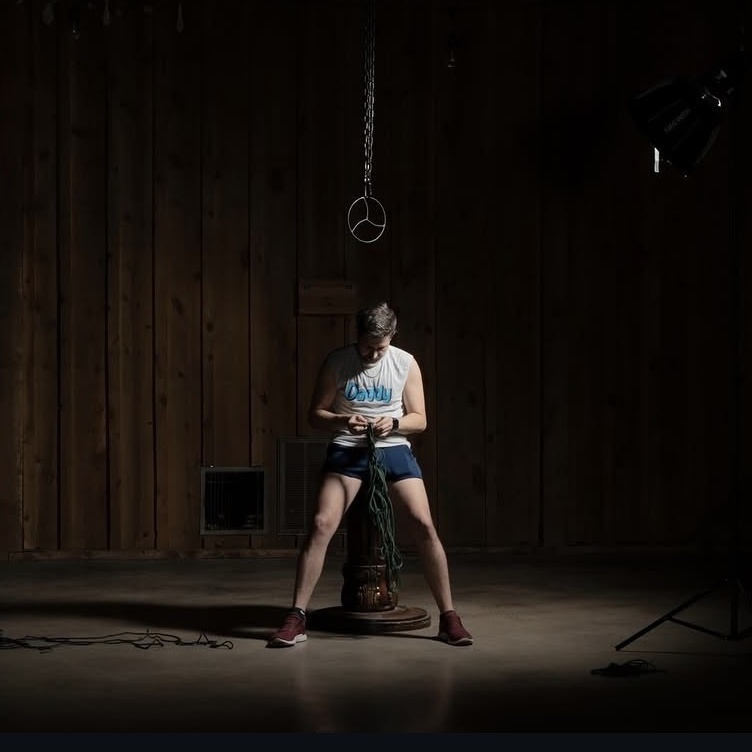
Rigger
I don’t do anything halfway. Almost six years ago that turned out to be a problem, in the best possible way — a casual interest in shibari became Shibari Sessions, then BoundHTX, then a spare bedroom repurposed as rope processing and a living room built around a nine-foot suspension frame.
Shibari Sessions is my for-profit studio: fine art rope photography, private lessons, and hand-tied rope and sex slings, made in small batches and sold cheap to other bondage organizations so they can resell it to fund their own programming — the same trick that’s kept BoundHTX’s classes free or low-cost since it started. BoundHTX is the nonprofit I run out of the Montrose Center, built specifically around technique and craft rather than lifestyle, so it stays a safe entry point for people from every background, including those for whom other kinds of content could be genuinely triggering.
This November, that same instinct to go all-in produced “ShibARTi” — a living rope art exhibition and competition at the Montrose Center benefiting the Montrose Center and BoundHTX. Forty artists build sculptural work in real time across two sessions, no rehearsal, nothing pre-built, judged on technical skill, composition, creativity, and impact by a panel that ranges from a working rigger to an art world representative to RuPaul’s Drag Race’s Jaymes Mansfield, flying in from Las Vegas, to Houston City Councilmember Mario Castillo. Guests vote too, for People’s Choice, and a professional photographer documents every finished piece so the work outlives the night it took to build. It’s… Read More